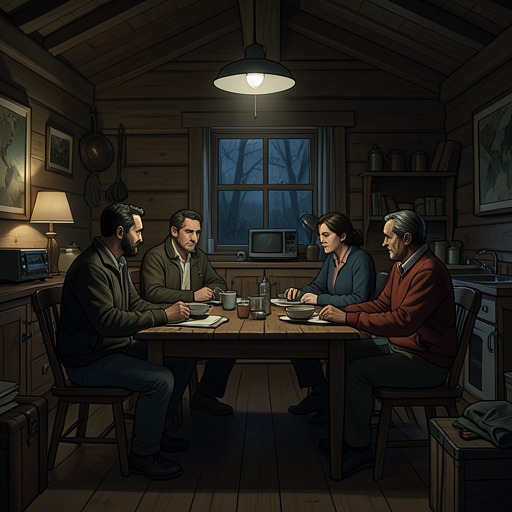
Event 1
The visitors’ ultimatum
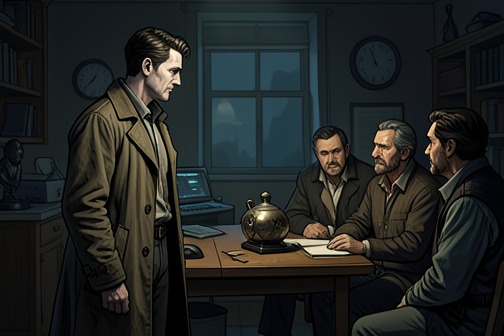
[The visitors’ ultimatum](entity:event-recall-event-the-visitors-ultimatum-0d8d94d6045c) is the demand that turns a claimed warning of apocalypse into a forced decision for [Andrew](entity:character-recall-character-andrew-531aa0f64cfb), [Eric](entity:character-recall-character-eric-7ec3f96e28e6), and [Wen](entity:character-recall-character-wen-79e161b9a39f). [Leonard](entity:character-recall-character-leonard-f502c6e53a05) presents the family’s choice as the only way to avert the end of the world, but the visitors also keep them at [The cabin](entity:location-recall-location-the-cabin-7bfe80451830) and insist that the family, not the visitors, must make and carry out the sacrifice. The gap between a choice in form and a decision made under confinement and an immense threat defines the event.
## The Message and Its Claim
Leonard explains that the four visitors have come to prevent the apocalypse and that everyone in the cabin can help stop it. He says the message was difficult for him to accept at first, but that he came to believe it was true regardless of whether he considered it fair. The visitors present themselves as messengers or as a mechanism through which the message must pass, rather than as the authors of the demand.
The ultimatum then specifies what the family must do: choose one of its three members to be sacrificed and kill that person. If the family does not choose, or does not follow through, Leonard says the world will end. He distinguishes the family’s fate from everyone else’s: Andrew, Eric, and Wen would survive long enough to witness the devastation, while more than seven billion other people would perish. The scale of the threatened consequence makes the decision at once intimate and global.
## Who Must Choose and Act
Leonard says the visitors cannot select the person to die and cannot perform the act on the family’s behalf. The family must make the choice and physically carry it out. The visitors’ account therefore places responsibility for the sacrifice on the people under threat, even as the visitors define the terms and consequences of refusing.
Leonard promises that the visitors will not kill Andrew, Eric, or Wen or otherwise harm them further, and says they will make them as comfortable as they reasonably can. That assurance is conditional in practice: the family must remain at The cabin until it chooses or the allotted time runs out. Leonard says time is short, without giving Eric a clear duration when Eric begins to ask. The promise of restraint does not restore freedom to the family; their alternatives are presented within continued confinement and a deadline.
## Repetition, Delay, and Response
After the family has seen news coverage of a devastating earthquake and tsunami, Leonard restates the demand. He calls the choice a gift and says the family will be offered it again the next morning: they can choose a sacrifice and save the world, or let the clock move closer to what he calls permanent midnight. He says the visitors will meet their needs within reason and otherwise leave them alone to reflect and talk. He repeats the statement immediately, matching its wording and delivery, turning the ultimatum into a rehearsed formula rather than an open discussion.
The family does not accept the visitors’ framing. When [Adriane](entity:character-recall-character-adriane-78facb5d7f13) appears to press the issue, Eric tries to prolong the conversation by asking her about the restaurants where she used to work. She slows, removes a mask from her hand, and hides it behind her back, but the visitors do not engage with Eric’s attempt to talk about their former lives. His delay shows the pressure of the demand without resolving it: the family has not made the required choice.
## Continuing Uncertainty
Later, Andrew asks Eric directly whether he believes one of them must be killed by another to keep the world from ending. The question shows that the ultimatum remains unsettled even after the disasters reported on television: the danger appears harder to dismiss, but the visitors’ explanation has not become an accepted necessity. The event’s central conflict is therefore not only whether the family will comply, but whether a decision made under these conditions can be treated as willing at all.
Event 2
Gaudet Lake cabin siege
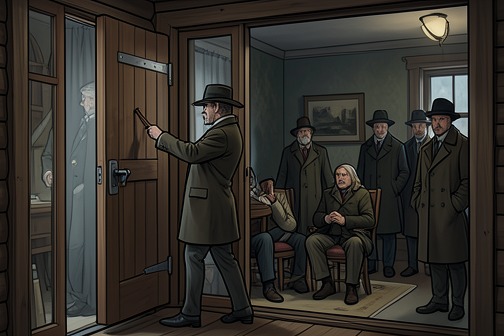
The [Gaudet Lake cabin siege](entity:event-recall-event-gaudet-lake-cabin-siege-98090346973c) begins as an attempted conversation and becomes a contest over entry, safety, and choice. [Leonard](entity:character-recall-character-leonard-f502c6e53a05) and his companions invade [Andrew](entity:character-recall-character-andrew-531aa0f64cfb) and [Eric](entity:character-recall-character-eric-7ec3f96e28e6)’s home, take control of the family, and impose an ultimatum: one of the three must be selected and killed to prevent the world’s destruction. The siege’s decisive tension is that the visitors present this demand as a gift and a voluntary decision, while the circumstances they create leave Andrew, Eric, and [Wen](entity:character-recall-character-wen-79e161b9a39f) unable to consider it freely.
## The Approach and Breach
Leonard initially insists that the visitors do not intend to harm the family and that they need to speak face-to-face. Yet as soon as he announces that he is coming in, the bolted door rattles under an attempted entry. Andrew, Eric, and Wen do not respond at first; Andrew then objects, and Eric braces himself against the door and asks the group to leave. The gap between Leonard’s careful assurances and his actions establishes the siege’s central contradiction before the visitors have explained their purpose.
Outside, one of the women looks through a window and taps its screen with the wooden end of her tool. After a hushed discussion among the visitors, [Redmond](entity:character-recall-character-redmond-6af5a32ff63f) moves around the cabin toward the back deck. Leonard continues speaking in an even, controlled manner, repeating that the visitors need the family’s help. Andrew draws curtains across the front windows and the kitchen’s glass door, reducing the light in the room while trying to block the intruders’ view. These efforts provide a brief physical barrier, not a resolution: the visitors remain positioned around the cabin, and the family does not know where they will enter next.
The breach comes through the kitchen’s glass slider. Redmond uses the sledgehammer end of his makeshift weapon to break through it, then forces the barricading couch into the kitchen. Andrew assesses how many visitors may still be outside and decides that he and Eric might be able to reach their SUV. He puts the keys in Eric’s pocket and urges him to move. The attempted escape is interrupted inside the cabin: Eric swings a pair of tongs at a woman who has entered through a bedroom window. Their struggle ends with Eric falling and becoming unresponsive. Andrew, unable to open the front door and leave, is left with Wen and no clear way to carry out the escape plan.
## Captivity and the Ultimatum
When Eric regains awareness, he and Andrew are seated in chairs and restrained. Eric remembers fragments of their effort to reach the SUV, including Andrew’s willingness to stay behind so Eric and Wen might get out, but cannot reconstruct everything that happened during his loss of consciousness. The family’s attempt to defend the cabin has therefore ended not in escape but in captivity, with the visitors controlling the room and the timing of what happens next.
Leonard eventually states the purpose of the invasion. He says that the family must willingly choose one of its three members and kill that person; otherwise, the world will end. In the visitors’ account, Andrew, Eric, and Wen would survive the catastrophe, but more than seven billion other people would die. Leonard initially presents the demand in a flat, announcement-like manner, then speaks with the fervor of someone trying to make the family accept an impossible proposition. Andrew is shocked by the scale and specificity of the claim, and imagines the destruction of [Cambridge](entity:location-recall-location-cambridge-9c17d42a788b) and [Boston](entity:location-recall-location-boston-aded649f4602) as he tries to grasp what the visitors are asking him to believe.
Leonard also promises that the visitors will not kill the family or touch them again, apart from what they say was necessary to enter the cabin and make them listen. He says they will remain in the cabin with the family until a choice is made or the available time runs out. That assurance does not undo the captivity or make the decision voluntary: the visitors have entered by force, keep the family there, and tie the family’s decision to a threat of worldwide death. Their language of choice and comfort sits beside the power they have taken over the family’s movements and circumstances.
## A Repeated Choice Under Pressure
The ultimatum is not confined to a single announcement. After Andrew and Eric refuse to change their minds, Leonard says they will be offered the same decision again the next morning. He calls it a gift and casts sacrifice as a difficult but selfless act, while describing continued refusal as allowing the clock to move closer to an irreversible end. He says the visitors will attend to the family’s needs within reason and otherwise leave them alone to reflect and talk. The repetition gives the siege a deadline structure: the family is expected to reconsider, even though the visitors have already heard its answer.
[The cabin](entity:location-recall-location-the-cabin-7bfe80451830)’s television brings the visitors’ claims into contact with public events. After coverage of an earthquake and tsunami in the northern Pacific, [Sabrina](entity:character-recall-character-sabrina-3c907245d1e7) changes the channel to Cartoon Network. The change briefly places an ordinary children’s program beside the disaster coverage, but it does not settle whether the catastrophe confirms Leonard’s warning. Eric remains troubled by what he may or may not have seen in the light, and the family must weigh the broadcast against the visitors’ explanation rather than receiving a simple resolution.
As the group again presses for a decision, Eric tries to prolong the conversation. When [Adriane](entity:character-recall-character-adriane-78facb5d7f13) hides a mask she has been holding, he asks her about the restaurants where she used to work; Sabrina responds that it is time for the family to choose. Eric’s attempt redirects attention toward the visitors’ former lives, treating conversation as a way to delay the demanded action and keep them engaged as people rather than as agents of a ritual. Their failure to answer and their closing together leave the pressure unresolved.
## The Family’s Refusal and the Siege’s Significance
Andrew and Eric’s disagreement is not about whether the visitors’ claims sound extraordinary; it is about whether those claims justify killing one another. Andrew points to the disasters that have occurred and challenges Eric’s effort to explain them away. He asks directly whether Eric thinks one of them must be killed to keep the world from ending. Eric answers instead by asking why the visitors would invent the story and subject the family to the ordeal. The exchange shows that the siege has reached beyond physical confinement into a dispute over evidence, trust, and responsibility, without yet producing agreement between the partners.
The event’s central reversal is that the visitors call the sacrifice a choice while controlling the conditions in which it is to be made. Their stated goal is to save humanity; their method places a family’s love for one another against an asserted global consequence. Andrew and Eric’s resistance keeps the demand from becoming an accepted rule, even as the disasters reported on television make refusal harder to treat as an abstract position. The siege thus converts a question about the end of the world into an immediate test of whether love and consent can survive an ultimatum imposed by force.
Event 3
Redmond’s sacrifice
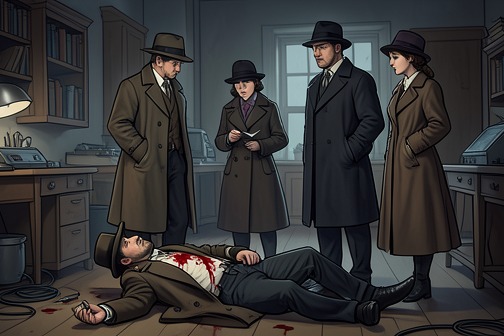
[Redmond’s sacrifice](entity:event-recall-event-redmond-s-sacrifice-2e4c92eb1c98) is the visitors’ violent answer to [Andrew](entity:character-recall-character-andrew-531aa0f64cfb), [Eric](entity:character-recall-character-eric-7ec3f96e28e6), and [Wen](entity:character-recall-character-wen-79e161b9a39f)’s refusal to select one of their family to die. [Leonard](entity:character-recall-character-leonard-f502c6e53a05), [Sabrina](entity:character-recall-character-sabrina-3c907245d1e7), and [Adriane](entity:character-recall-character-adriane-78facb5d7f13) kill [Redmond](entity:character-recall-character-redmond-6af5a32ff63f) in the cabin, treating his death as the sacrifice demanded by their apocalyptic prophecy. The act transforms an ultimatum framed as a choice into an imposed killing, and the subsequent earthquake does not resolve whether the sacrifice could have prevented disaster; it intensifies the visitors’ conviction that the family has failed a test with consequences for the whole world.
## The Ultimatum and Its Contradictions
Leonard tells the family that one of its three members must willingly be sacrificed, and that the chosen person must then be killed. If the family neither chooses nor carries out the death, he says, more than seven billion people will perish while the family survives to witness the devastation. His announcement moves from a flat, almost routine delivery into the fervor of a religious appeal. Andrew is frightened by its implications and imagines the ruins of [Cambridge](entity:location-recall-location-cambridge-9c17d42a788b) and [Boston](entity:location-recall-location-boston-aded649f4602), but he cannot make the demand feel like an ordinary decision: the choice is being made under threat of global catastrophe, while the family is restrained inside the cabin.
Leonard also promises that the visitors will not kill the family or harm them further, provided they remain in the cabin until they choose or their time runs out. The promise sits uneasily beside the threat that refusal will bring the end of the world. Later, Leonard calls the choice a gift and says the family will be given it again the next morning, presenting sacrifice as difficult but selfless. The language of a gift cannot remove the coercion built into the offer: the family is held in place, faces a threatened apocalypse, and is expected to decide which loved one should die.
## The Choice Is Enforced
As the confrontation reaches its turning point, Eric tries to keep the visitors talking. He asks Adriane about the restaurants where she used to work, using the conversation to delay the group as they close in. Sabrina insists that the family must choose. Andrew, still struggling against his restraints, wonders whether the visitors would kill one another as they had killed O’Bannon, and whether they would eventually turn on him, Eric, or Wen. His questions register how little control the captives have over what the visitors will do next.
Wen attempts to move away from Andrew, testing whether the visitors will stop her. Adriane lunges with her weapon. In the immediate confusion, Sabrina swings her staff at Redmond, and Adriane and Sabrina continue striking him. Leonard then circles into position with a weapon made from a sun-bleached boat oar and a sledgehammer head. He waits for an opening between the women’s swings before bringing it down on Redmond. The sequence has the order and coordination of an execution, not the deliberation of a choice made by Redmond’s family. The event provides no basis for treating his death as the family’s willing selection; the visitors decide to enact the sacrifice themselves after the family refuses.
## Redmond’s Death and the Family’s Witness
The attack ends when Leonard delivers the final blow. The violence stops, and Redmond’s hands close as his body becomes still. Andrew is bound to his chair throughout the killing; Wen remains beside him, facing away from the scene. Her breathing is ragged, and Andrew tells her not to look. His attention is thus divided between the death taking place in front of him and the child he is trying to shield from witnessing it. The sacrifice is not an abstract doctrine for the family: it happens within reach of Andrew and Wen, while Eric is also restrained and unable to intervene effectively.
The other visitors participate in distinct ways. Sabrina and Adriane initiate and sustain the attack with their weapons; Leonard delivers the blow that ends it. The killing also alters the relation between Leonard’s assurances and his actions. He had promised that the visitors would not kill the family, but the family’s refusal does not lead them to leave or abandon their demand. Instead, they make Redmond the victim of the sacrifice they claim the family should have chosen. That substitution does not make the death voluntary, nor does it settle whether Redmond himself consented; the evidence establishes the group’s action, not a willing choice by him.
## Aftermath and Significance
The visitors interpret the killing as necessary, but the next major broadcast complicates their claim that sacrifice can prevent disaster. News coverage reports an 8.6-magnitude earthquake about seventy miles off the [Oregon](entity:location-recall-location-oregon-c068cd7d4a38) coast, in the [Cascadia Subduction Zone](entity:location-recall-location-cascadia-subduction-907a202e08f8). Leonard exclaims that this is the foretold event and tells the family that they could have stopped it by making a sacrifice. He says that because they did not, the visitors were forced to make one for them, and presents the earthquake as the consequence. This is Leonard’s interpretation of the disaster, not independent proof that Redmond’s death caused it or that another death would have prevented it.
Leonard repeats that the family will face the choice again the following morning, while Andrew insists that he and Eric will not change their minds. Later, Andrew asks Eric directly whether one of them must be killed by another person to keep the world from ending. The question shows that Redmond’s death has not resolved the moral or factual uncertainty: it has made the ultimatum harder to dismiss, without demonstrating that the visitors’ ritual works. The episode’s central reversal is therefore stark. A demand justified as a way to save humanity produces a killing carried out against the family’s will, followed by another disaster that the visitors use to reinforce the same demand.
Event 4
Aleutian Islands earthquake and tsunami
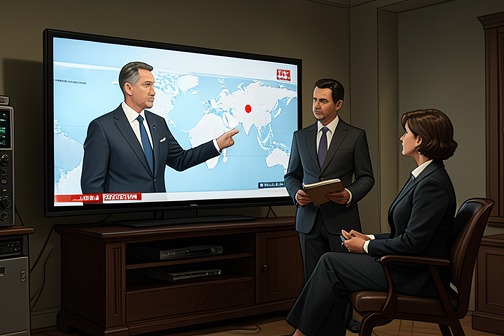
The [Aleutian Islands earthquake and tsunami](entity:event-recall-event-aleutian-islands-earthq-0d7d7c4906b7) is the first major natural disaster shown on the cabin television as evidence in the visitors’ apocalyptic argument. News reports describe a powerful earthquake followed by a tsunami warning and flooding in [Hawaii](entity:location-recall-location-hawaii-ea53a8e2a05b); for [Leonard](entity:character-recall-character-leonard-f502c6e53a05), the sequence confirms that the family’s refusal to select a sacrifice has consequences. Yet the coverage also reports successful evacuations and no injuries or fatalities at the time, leaving a gap between the visitors’ catastrophic interpretation and the specific human toll presented on screen.
## Background and warning
The earthquake is reported as a magnitude 7.9 event centered in the [Aleutian Islands](entity:location-recall-location-aleutian-islands-826748cacf3b), a chain of volcanic islands stretching across the Bering Sea. By the time the network welcomes viewers back to its continuing coverage, the quake has struck more than four hours earlier. The report places its epicenter near the northern Pacific’s Ring of Fire, a region monitored by a network of tsunami detection buoys. The interval between the earthquake and the broadcast matters: the cabin’s occupants do not witness the seismic event itself, but encounter it through a news account assembled after the initial shock.
The U.S. National Tsunami Warning Center issues a cautionary advisory for British Columbia and more than a thousand miles of the [Pacific Northwest](entity:location-recall-location-pacific-northwest-40cfe44c3f3a) coastline, including Seattle and Portland. The Pacific Tsunami Warning Center issues its strongest warning for Hawaii. Residents and tourists on north-facing coastlines are ordered to evacuate and seek higher ground. A spokesperson explains that nearly two dozen detection buoys across the Northern Pacific, including a cluster around the northern Ring of Fire, provide data indicating that a wave roughly fifteen to twenty feet high is moving south toward the Hawaiian Islands.
## Television coverage and landfall
The broadcast moves from studio reporting to video of the consequences. A newscaster announces that a tsunami has made landfall, and the network shows a resort on [Kauai](entity:location-recall-location-kauai-ae4c3a138334). The footage’s status is left uncertain: the cabin’s viewers cannot tell whether it is live or recorded. The resort has already been evacuated. The incoming water floods its grounds and lower-level areas, while other reports show waves affecting smaller communities and less populated islands, including damage to boats, marinas, docks, and coastal roads.
The spokesperson acknowledges that erosion and property damage will be extensive, while describing the warning system as successful because authorities had time to evacuate exposed coastlines and low-lying areas. At this early stage, the broadcast reports no injuries or deaths. That qualification is important to the event’s presentation: the disaster is real and disruptive, but the available report does not depict a mass-casualty aftermath. Its images and figures arrive amid commercials, a scrolling ticker, and repeated studio coverage, making television both the cabin’s principal source of information and the medium through which distant catastrophe becomes immediate to its captives.
## The disaster as proof
The earthquake and tsunami enter a cabin already governed by Leonard’s claim that the four visitors received a shared message and were united by a vision. He presents the family with a demand to choose and kill one of its three members, insisting that failure to do so will bring an apocalypse. When the Hawaiian coverage appears, Leonard treats the unfolding events as confirmation that the family could have prevented them by making the demanded choice. The news report itself establishes the earthquake, warnings, landfall, and evacuation; the assertion that these events prove the visitors’ mandate is Leonard’s interpretation of the report.
That distinction becomes sharper when the disaster is placed in the sequence described later by [Sabrina](entity:character-recall-character-sabrina-3c907245d1e7). She counts [Redmond](entity:character-recall-character-redmond-6af5a32ff63f)’s death before the earthquake and tsunami, then [Adriane](entity:character-recall-character-adriane-78facb5d7f13)’s death before the spread of bird flu, arguing that each death is followed by another calamity. The sequence turns separate events into a rule within the visitors’ reasoning: catastrophe is presented not as an isolated occurrence but as a response to the family’s failure to choose. The television’s coverage supplies observable events for that claim, while the visitors’ explanation supplies the supposed causal connection.
## Escalation and narrative significance
The Aleutian disaster is followed, during the same period of confinement, by a report of a second major earthquake: magnitude 8.6, with an epicenter about seventy miles off the [Oregon](entity:location-recall-location-oregon-c068cd7d4a38) coast in the [Cascadia Subduction Zone](entity:location-recall-location-cascadia-subduction-907a202e08f8). Leonard greets the news as the next stage of the consequences he has predicted. The second earthquake is a distinct event, but its arrival extends the pattern established by the Aleutian quake and tsunami: successive broadcasts appear to turn the visitors’ warning into a chain of increasingly difficult events for the family to dismiss.
The television continues to shape how that chain is experienced. Later coverage shifts to a montage of airports, hospitals, crowded public spaces, and people wearing masks; a subsequent broadcast shows wrecked aircraft. These images broaden the apparent crisis beyond the Pacific disasters and reinforce the screen’s recurring function as a source of breaking calamity. The Aleutian earthquake and tsunami therefore mark a turning point in the cabin’s argument over what the family is seeing. The event lends force to Leonard’s claims without, by itself, establishing that the visitors’ demanded sacrifice could have prevented it.
Event 5
Cascadia Subduction Zone earthquake
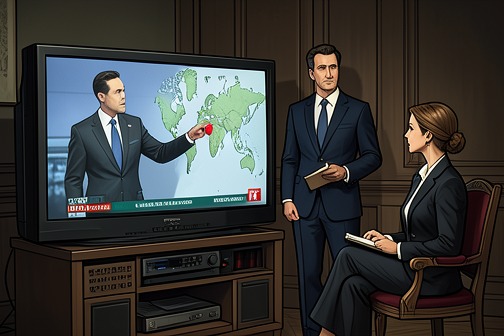
The [Cascadia Subduction Zone earthquake](entity:event-recall-event-cascadia-subduction-zon-dbcdec1de6d6) is a second, more powerful Pacific earthquake in the unfolding disaster sequence, striking offshore of [Oregon](entity:location-recall-location-oregon-c068cd7d4a38) after a 7.9-magnitude earthquake in the [Aleutian Islands](entity:location-recall-location-aleutian-islands-826748cacf3b). Reported on television inside the besieged cabin, it transforms the visitors’ claim that a sacrifice could avert catastrophe into a crisis unfolding before the family’s eyes. The news confirms the quake and the tsunami threat, but the account does not establish the full extent of the destruction on the Oregon coast.
## Causes and Background
The earthquake is announced during continuing coverage of the Aleutian Islands earthquake, which had struck more than four hours earlier. The newscaster interrupts the coverage to report a second massive quake in the Pacific, registering 8.6 on the Richter scale. Its epicenter is only seventy miles off the Oregon coast, in the [Cascadia Subduction Zone](entity:location-recall-location-cascadia-subduction-907a202e08f8), a region scientists have long feared could produce a catastrophic earthquake.
The relationship between the two earthquakes remains a scientific proposal rather than a confirmed explanation. After the second quake, a seismologist suggests that the Aleutian Islands earthquake triggered it. The sequence nevertheless gives the visitors’ apocalyptic claims a new and alarming form: disaster is no longer represented by one distant event, but by earthquakes following one another across the Pacific.
## News of the Earthquake
The announcement arrives amid television coverage of the tsunami already striking [Hawaii](entity:location-recall-location-hawaii-ea53a8e2a05b) after the Aleutian quake. The station has been showing resort footage and repeating its figures and timelines when it cuts abruptly back to the lead broadcaster. He has a finger in his ear and does not appear to realize he is on air before recovering to announce the new earthquake. The interruption and his momentary disorientation make the report feel immediate, even as the broadcast’s rapid shifts leave the people in the cabin struggling to absorb it.
[Leonard](entity:character-recall-character-leonard-f502c6e53a05) takes the news as confirmation that the family’s refusal to make a sacrifice has had consequences. He initially accuses them of failing to prevent the disaster, then falters and corrects himself: in his revised account, the failure belongs to all of them. His movement from certainty to tears does not resolve what caused the earthquake; it reveals how urgently he is trying to fit the broadcast into the visitors’ sacrificial explanation.
## Tsunami Threat
The broadcast describes the second quake as lasting almost five minutes. Because the epicenter is close to shore, scientists warn that people along the coast may have only minutes to reach higher ground. The quake’s size and duration may also have damaged buildings and infrastructure, making mass evacuation difficult or impossible in some low-lying areas.
A scientist estimates that the resulting tsunami could be twenty to fifty feet high. The wave could stretch for kilometers, sustaining its surge inland rather than delivering only a brief rise in water. Viewers are urged to seek ground eighty to one hundred feet above sea level; the fifty-foot bluffs along the coast may not be high enough. The warnings turn the earthquake from a geological report into an immediate evacuation threat.
The newscaster then announces that a tsunami has struck the Oregon shoreline and introduces footage from [Cannon Beach](entity:location-recall-location-cannon-beach-09910f216de6), warning that the images are disturbing. This follows the earlier reporting from Hawaii, where the Pacific Tsunami Warning Center had described a fifteen-to-twenty-foot wave moving toward the islands and footage showed flooding at a resort on [Kauai](entity:location-recall-location-kauai-ae4c3a138334). The two reports distinguish the first quake’s tsunami impact in Hawaii from the newly reported danger on the Oregon coast.
## Consequences and Narrative Significance
For the people in the cabin, television functions at once as evidence and as an imposed spectacle. Leonard insists that the family watch, while the repeated figures, warnings, and disaster images compete with [Eric](entity:character-recall-character-eric-7ec3f96e28e6)’s effort to understand what is happening. The broadcast supplies credible, concrete details about earthquakes and evacuation, but it does not verify the visitors’ claim that a sacrifice could have stopped either disaster. That gap between observable catastrophe and the visitors’ interpretation is central to the scene’s tension.
The earthquake also marks an escalation in the story’s sequence of televised emergencies. Later, the television fills with images of crowded cities, hospitals, and people wearing surgical masks; later still, it shows wrecked airplanes and smoking crash sites. These reports extend the sense of a world in crisis, but the narrative does not identify them as consequences of the Cascadia earthquake. For the Oregon event itself, the evidence confirms the quake, the tsunami warning, and a reported strike on the shoreline, while leaving the eventual human toll and extent of damage unsettled.
Event 6
New Hampshire cabin siege
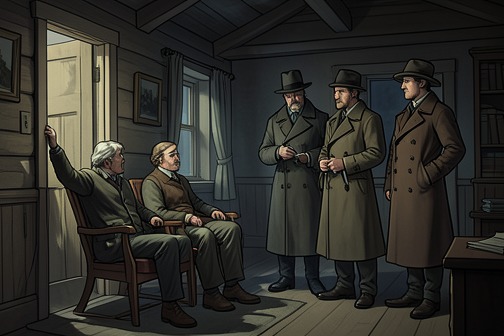
The [New Hampshire cabin siege](entity:event-recall-event-new-hampshire-cabin-sie-b682b7b35394) confines [Andrew](entity:character-recall-character-andrew-531aa0f64cfb), [Eric](entity:character-recall-character-eric-7ec3f96e28e6), and [Wen](entity:character-recall-character-wen-79e161b9a39f) under the control of [Leonard](entity:character-recall-character-leonard-f502c6e53a05), [Sabrina](entity:character-recall-character-sabrina-3c907245d1e7), [Redmond](entity:character-recall-character-redmond-6af5a32ff63f), and [Adriane](entity:character-recall-character-adriane-78facb5d7f13), who present a forced sacrifice as the means to save the world. Its decisive turn comes when the visitors act on that demand and kill Redmond, then renew it the following morning. By setting their language of choice and duty against the family’s captivity, the episode makes the supposed test inseparable from the violence used to impose it.
## Background and the Offered Choice
The visitors’ demand is framed as a moral test: Andrew and Eric must choose one of themselves to die, a sacrifice the visitors say will save the world and Wen. The family is not free to leave or refuse on equal terms. Andrew and Eric are tied to chairs, while the visitors control the room and the weapons. The conflict therefore rests on a sharp contradiction: Leonard describes the decision as a gift, but the captives have been deprived of the freedom that would make a choice theirs.
Before the first killing, Eric asks Leonard to explain who showed the visitors their nightmares and told them about the family. Leonard does not answer the question; instead, he declares that the choice has been made. The refusal to clarify the visitors’ knowledge or its source leaves their claim to authority unexamined, even as they prepare to enforce it. The silence is followed by a coordinated advance: Redmond and Sabrina step forward with their weapons, while Adriane remains close to her own. Eric and Andrew protest and struggle against their restraints, but cannot stop what follows.
## Redmond’s Death
Wen begins to slide from Andrew’s lap, apparently preparing to get away. Andrew tries not to draw attention to her movement and considers possible routes through the room, hoping that an escape attempt might distract the captors. Before she can make a run for it, Adriane strikes Redmond from behind with her weapon. Redmond remains upright and kneeling after the blow; Wen reaches the floor and stands beside Andrew’s chair.
Leonard then circles behind Redmond, waits for an opening between Adriane and Sabrina, and uses a wooden oar fitted with a heavy metal end to deliver the fatal blow. Andrew is still restrained close by. The visitors’ violence has changed the scene from a demand for sacrifice into a killing carried out among the captors themselves, with Leonard participating rather than merely invoking a rule. The group’s actions make the supposed necessity of sacrifice visible as a decision enacted by people, not an abstract force beyond them.
## Captivity and the Renewed Demand
After Redmond’s death, Sabrina changes the television from coverage of an earthquake and tsunami to the Cartoon Network. At Andrew’s suggestion, Wen sits with Eric and watches Adventure Time, cross-legged on his feet. The contrast between the family’s confinement and the familiar cartoons does not end the crisis; it gives Wen a brief, ordinary occupation while the adults remain bound and try to protect her from the captors’ pressure.
The visitors clean and prepare the cabin. Sabrina scrubs the floor, while Adriane washes the homemade weapons and returns the kitchen table to its place, steadying one of its uneven legs with Andrew’s book of critical essays. These domestic tasks proceed around the family’s continuing captivity. Andrew and Eric spend the afternoon and evening tied to their chairs, checking on Wen’s needs but otherwise retreating into anxious thoughts and increasingly hopeless plans to escape. As the sun sets, the television becomes the common room’s only light until the visitors turn on the lamps; outside, Redmond’s covered body is difficult to make out from within.
Leonard tells the family that they will receive the same choice again the next morning. He presents the delay as time to reflect and promises that the visitors will meet their needs within reason, while repeating that sacrifice would save the world. The offer does not release the family or restore their ability to decide freely. It instead extends the siege through the night, with the television, the restraints, and the visitors’ preparations marking the gap between ordinary domestic routines and the threat hanging over them.
## The Second Presentation and Its Consequences
After a hurried breakfast the following morning, Sabrina checks Eric’s wound and says it is not infected, though it might have needed stitches. The visitors remove the blankets and mattresses from the common room and drag Andrew, still tied to his chair, away from the front door and toward the center. When Eric asks not to be dragged because of his concussion, Leonard refuses to untie him. The rearrangement of the room makes the renewed demand a prepared confrontation rather than a conversation among equals.
Adriane introduces the same choice as the day before, with Sabrina’s encouragement. Eric counters that the visitors themselves have the power to let the family go and do what is right. Adriane replies that they believe they have no choice and would not be allowed to release the family. Their disagreement exposes the different meanings each side assigns to responsibility: the captives identify the visitors’ immediate power to stop, while the visitors invoke commands that they say they cannot question.
Andrew asks Leonard to look at the tied family and at the dead man on the deck, challenging the claim that their actions are normal or right. Leonard answers by returning to the proposed sacrifice and invoking Wen’s survival. Eric stops him before he can continue. The siege thus sustains its central pressure without resolving the visitors’ claims about who chose them or what would happen if the family complied. Leonard’s later remorse over his role in the killings, alongside his belief that he must continue, further exposes the cost of turning obedience into an excuse for violence. The episode’s force lies in that unresolved conflict: a demand called a choice is enforced through captivity, and the language of saving the world does not erase the responsibility of those carrying it out.
Event 7
Andrew's assault by Jeff O'Bannon at a Boston bar
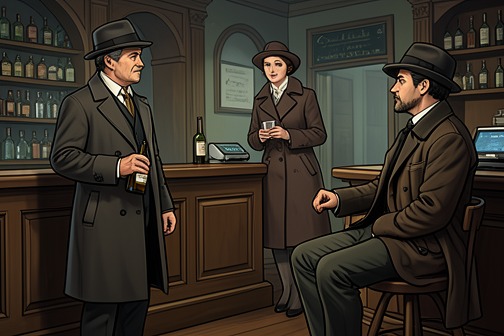
[Andrew](entity:character-recall-character-andrew-531aa0f64cfb)’s assault by [Jeff O’Bannon](entity:character-recall-character-jeff-o-bannon-4e529f9babaf) at a [Boston](entity:location-recall-location-boston-aded649f4602) bar begins as an evening of nostalgia and ends as a wound that continues to shape Andrew’s sense of safety. In [November 2005](entity:time-recall-time-november-2005-ea5fffddd108), O’Bannon struck Andrew at the [Penalty Box](entity:location-recall-location-penalty-box-6429d946061b) after using a homophobic slur; years later, Andrew recognized the man among the strangers holding his family at the cabin. The assault’s lasting force lies not only in what happened, but in the unresolved question of why Andrew was singled out—and in the way the attacker’s identity returns inside a new, far more immediate danger.
## Setting and the Evening Before the Attack
The Penalty Box stood on Causeway Street, across from North Station and [Boston Garden](entity:location-recall-location-boston-garden-8a6c91071b47). A hockey bar in name, it drew hard-drinking patrons and crowds connected to Bruins and Celtics games. Its upstairs room, the Upstairs Lounge, had once hosted Friday-night dance parties. Andrew and a small group of friends had attended those events regularly for nearly five years, including after the parties moved to Allston. By 2005, the upstairs venue had long been closed.
That November, Andrew and his friend Ritchie went to the bar after leaving a Celtics game early. The home team was losing badly, and the two friends had come for a drink and a measure of nostalgia. Andrew wore an old Robert Parish tank top over a long-sleeved shirt; Ritchie wore a new Paul Pierce jersey, despite having spent much of the game criticizing the player. They had been inside for less than ten minutes when the assault began.
Andrew went to the bar for two beers, then carried them to Ritchie, who was talking with a middle-aged woman in a Bruins hoodie. She joked with Ritchie, complimented him, and asked him to dance, although no music was playing. The television carried the muted audio of the game. Ritchie playfully prolonged the conversation, making excuses about his sore legs and balance while the woman encouraged him and asked for another beer. Andrew joined in the banter. The exchange was social and light; nothing in Andrew’s recollection suggests that he anticipated a confrontation.
## The Assault and Its Immediate Aftermath
O’Bannon came up behind Andrew and addressed him with a homophobic slur. Andrew turned toward the speaker, but had not yet seen O’Bannon in person. As he turned, O’Bannon hit him over the head with a beer bottle. Andrew remembered the sound and a sudden cold sensation, then the floor drawing nearer as he fell. He later recalled lying facedown while people shouted. He did not remember getting into the ambulance, though he did remember insisting on sitting upright during the ride.
At the hospital, Andrew saw [Eric](entity:character-recall-character-eric-7ec3f96e28e6) for the first time after the attack. Eric asked what had happened; Andrew began to answer, then stopped himself before completing a thought that would have turned the question into self-blame. His recollection of that pause shows how quickly the assault became entangled with shame, even though the attack had been carried out by someone else.
O’Bannon later pleaded guilty. In court, he said that he had been drunk and not thinking clearly, claimed Andrew had accidentally spilled a beer on one of his friends, and described the group as looking for a fight. Andrew’s account contradicts that explanation: he remembers no such spill and recalls O’Bannon’s slur as clear and deliberate. O’Bannon also maintained that the slur did not explain his actions and was merely language he and his friends used. The assault is therefore presented alongside a dispute over its motive, not as an incident whose full circumstances have been resolved.
## The Attack’s Long Afterlife
For years, the assault recurred in Andrew’s preparation for boxing lessons, workouts, and visits to the shooting range. During the first couple of years afterward, difficulty sleeping sometimes led him to search online for O’Bannon. Once he had exhausted information about his attacker, Andrew spent hours reading about other people with the same name, including men with unrelated lives and jobs. Eric once found Andrew asleep at a desk chair after one such night and led him back to bed.
Andrew eventually stopped searching. He no longer looked over his shoulder in public as often or as urgently, although the vigilance never disappeared completely. In unguarded moments, he continued to turn over questions that the court proceedings had not settled: why O’Bannon had chosen him, whether he had recognized Andrew as gay, and whether someone else might have been attacked if circumstances had differed. Andrew knew the slur had made the hatred unmistakable, but could not know how O’Bannon had identified him or whether the choice had been deliberate in advance. The assault left not only a memory of violence but an enduring uncertainty about how he had been marked as its target.
## Recognition at the Cabin
During the later cabin crisis, Andrew recognized [Redmond](entity:character-recall-character-redmond-6af5a32ff63f) as Jeff O’Bannon. Redmond’s shaved head, greater age, and substantially heavier appearance had changed his face enough that Andrew did not recognize him immediately. Once he did, Andrew told Eric that the man was O’Bannon and asked whether Eric understood who he meant. The revelation recast the earlier assault: the attacker Andrew had spent years trying to understand was now among the people threatening his family.
That recognition does not provide an answer to Andrew’s old questions about why he was selected at the bar. Instead, it brings the uncertainty into the present, where the attacker is no longer a name in searches or a figure described in court testimony. Redmond is later killed at the cabin, and Andrew is present as his companions’ violence reaches its fatal conclusion. The connection between the two episodes makes the assault part of the family’s immediate crisis while preserving the distinction between what Andrew knows—O’Bannon attacked him—and what he has never been able to determine about the attacker’s choice.
Event 8
St. Francis Dam Disaster
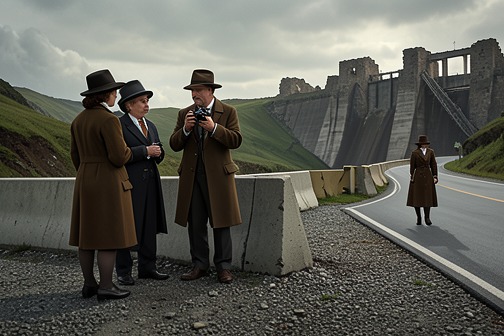
The [St. Francis Dam Disaster](entity:event-recall-event-48dd3a6bdf65) was a catastrophic dam failure in [March 1928](entity:time-recall-time-march-1928-7defad13f759) that sent billions of gallons of water through a valley, killing more than four hundred people. In [Sabrina](entity:character-recall-character-sabrina-3c907245d1e7)’s recollection, the remains of the dam become more than a historical site: they are the setting for an encounter that leaves her feeling like a witness to devastation she cannot prevent.
## The collapse and its aftermath
The dam collapsed in the middle of one night in March 1928. Huge pieces of concrete and billions of gallons of water rushed through the valley, destroying houses and ranches. More than four hundred people died, and the flood carried bodies as far as the Pacific Ocean. The scale of the disaster—an engineered structure giving way and devastation traveling far beyond the site—gives the ruins a history that Sabrina initially does not know.
## Sabrina’s journey to the ruins
Sabrina recounts an impromptu trip to Valencia. She drove north on Interstate 5 without a map or GPS, took a random exit, and continued through suburban development to [San Francisquito Canyon Road](entity:location-recall-location-san-francisquito-can-7a73c378e5e4). At a sharp bend, she parked in a small gravel lot beside a concrete divider. Beyond it lay the former San Francisquito Road, closed and rerouted after repeated washouts, running alongside the dam ruins.
Sabrina walked alone along the closed road, which was being overtaken by vegetation, clay, and dirt. She had not researched the dam before visiting; she learned what had happened there only after returning home and looking it up online. The valley seemed empty, and the contrast between the surviving landscape and the disaster’s immense toll makes the site feel to her like a remnant of a destroyed world.
## The ruins and the encounter
About thirty minutes into her walk, Sabrina passed a roughly fifteen-foot, cube-shaped piece of dam concrete in the brush. Its worn, striated surface looked to her like part of a giant staircase. At the time, she did not recognize it as a fragment of the dam; it appeared simply to be a man-made ruin left behind by a doomed past.
After walking for perhaps another half hour, Sabrina stopped at what she later thought was the place where the dam had stood across the valley. She left the road and crossed rubble, stones, and small pieces of porous concrete. There, she felt that she was no longer alone and expected something to appear over the hills. She then lost consciousness. The account does not identify what, if anything, she encountered; it establishes the blackout and her fear without resolving its cause.
## Significance in the narrative
Sabrina’s visit joins a documented historical disaster to the novel’s uncertain language of visions and apocalypse. Before the encounter, she believed her role might be only to witness what she could not stop; afterward, she wishes that passive witness were still all she had to do. The disaster’s ruins thus become the setting for a shift in her sense of what she has been shown and what may be demanded of her. The episode preserves uncertainty: the dam’s collapse is presented as history, while the meaning of Sabrina’s experience at its remains stays unexplained.
Event 9
Sabrina’s Flood Vision at the St. Francis Dam Site
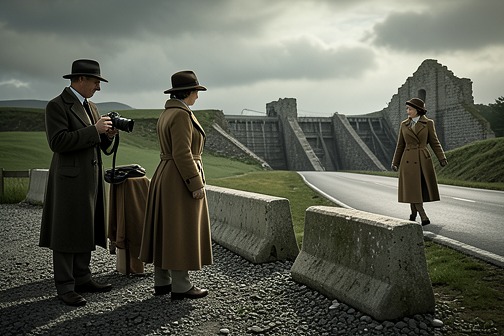
[Sabrina’s Flood Vision at the St. Francis Dam Site](entity:event-recall-event-9d6a378080d4) is a memory [Sabrina](entity:character-recall-character-sabrina-3c907245d1e7) shares with [Andrew](entity:character-recall-character-andrew-531aa0f64cfb) and [Eric](entity:character-recall-character-eric-7ec3f96e28e6) that links her solitary visit to a historic disaster with the story’s disputed warnings of catastrophe. At the ruins of the St. Francis Dam, she experiences a flood as though the valley were being destroyed around her, then finds herself back at her car without remembering the walk there. Her account makes her a witness to devastation, but not a prophet whose visions neatly confirm the others’ claims: she insists that she did not see the tsunami [Adriane](entity:character-recall-character-adriane-78facb5d7f13) said she had foreseen.
## The visit to the dam ruins
Sabrina describes an impromptu trip that took her north from Valencia along I-5, without maps or GPS. After taking a random exit, she continued through suburban development to [San Francisquito Canyon Road](entity:location-recall-location-san-francisquito-can-7a73c378e5e4), where the route quickly became rural. She parked in a small gravel lot beside a concrete divider and walked along the former San Francisquito Road, closed and rerouted after repeated washouts. The road followed the ruins of the St. Francis Dam.
The site carried a history of catastrophic flooding before Sabrina’s vision began. The dam had collapsed during the night in [March 1928](entity:time-recall-time-march-1928-7defad13f759), sending enormous quantities of water through the valley, destroying homes and ranches, and killing more than four hundred people. Sabrina says she learned the history only after returning home and looking it up online. At the time of her walk, she understood the place as a landscape of human-made ruins, not as the site of a disaster she already knew in detail.
She walked alone through a dry, sparsely inhabited valley, following the closed road as vegetation, clay, and dirt encroached on it. Roughly thirty minutes into the walk, she passed a cube-shaped piece of dam concrete about fifteen feet tall, set in the brush. It looked to her like a fragment of a giant staircase. About another half hour later, she stopped and left the road, crossing rubble and small pieces of porous concrete toward what she believed was the place where the dam had spanned the valley.
## The flood experience
At the lowest point of the valley, Sabrina describes an abrupt break in ordinary perception. She felt that she was no longer alone and expected something to appear, but she could not bring herself to identify that presence as [God](entity:character-recall-character-833766c1de3f). Then everything went black. She distinguishes this darkness from nightfall: she could not see, and describes herself as having no presence or identity within it.
Sounds followed in sequence: strained groans, a thunderous crack, and the rush of water. Sabrina experienced the flood moving over and past her into a landscape she could no longer see. She heard trees break, buildings collapse, and people scream; the cries stopped before they seemed complete, leaving her to imagine their continuation. The water’s passage seemed to persist beyond the destruction, and Sabrina recalls herself as another piece of debris carried along with it. Her account presents the vision not as a clear message or a scene she could control, but as prolonged exposure to a catastrophe that had already happened and yet seemed to continue without end.
The experience eventually gave way to Sabrina’s return to ordinary surroundings. She found herself back at her car, near noon, but could not remember walking back. She says that other gaps in her memory remain, including gaps she does not want to fill. The missing interval is central to how she tells the event: she can recount what she heard and experienced, but cannot supply a continuous account of how she left the valley or returned to the car.
## Relation to the visitors’ claims
Sabrina recounts the vision while explaining the memory gaps and altered states she associates with the visitors’ message. [Leonard](entity:character-recall-character-leonard-f502c6e53a05) had presented the group as people united by a shared vision and a command to prevent the apocalypse. He told Andrew, Eric, and [Wen](entity:character-recall-character-wen-79e161b9a39f) that they must willingly choose and kill one of their own or the world would end. Sabrina’s account does not establish that the experience at the dam caused her to accept that mandate, nor does it prove the visitors’ interpretation of events. Instead, it discloses how uncertain her own memories and agency have become within the situation.
That uncertainty is sharpened by Sabrina’s explicit distinction between her experience and Adriane’s. She knows Adriane said she saw the rock and the tsunami before the group watched disaster coverage on television, but Sabrina says she saw none of that. At the dam, she encountered darkness and a flood experience; she does not claim advance knowledge of the later tsunami. This difference matters because the group’s story depends on treating separate experiences as parts of a single warning, while Sabrina’s testimony preserves a limit on what she herself witnessed.
## Significance and aftermath
The historic disaster and Sabrina’s vision occupy overlapping but distinct layers. The dam’s collapse is a real event in the account’s background; the flood Sabrina experiences during her walk is presented through her uncertain memory. Her description of the ruined valley as a place where she felt reduced to a passive witness later informs her account of the group’s violence and her sense that parts of herself were absent during it. In this way, the vision connects the earlier walk to the captivity without resolving whether its force comes from supernatural intervention, trauma, or an explanation Sabrina cannot fully give.
Later calamities make the group’s interpretation harder to dismiss within the cabin. A televised report announces a 7.9-magnitude earthquake in the [Aleutian Islands](entity:location-recall-location-aleutian-islands-826748cacf3b), followed by tsunami warnings for [Hawaii](entity:location-recall-location-hawaii-ea53a8e2a05b) and footage of flooding on [Kauai](entity:location-recall-location-kauai-ae4c3a138334). Another report announces an 8.6-magnitude earthquake off [Oregon](entity:location-recall-location-oregon-c068cd7d4a38) near the [Cascadia Subduction Zone](entity:location-recall-location-cascadia-subduction-907a202e08f8). Sabrina later recites the deaths and disasters as an escalating sequence used to press Andrew to choose a sacrifice. These broadcasts echo the apocalyptic scale of her memory, but they do not turn the dam-site experience into a straightforward prediction: Sabrina’s own account expressly separates her vision from Adriane’s claimed foreknowledge. The episode’s significance lies in that unresolved boundary between witnessing destruction, remembering it incompletely, and being told what it must mean.
Event 10
Oregon Coast Earthquake and Tsunami
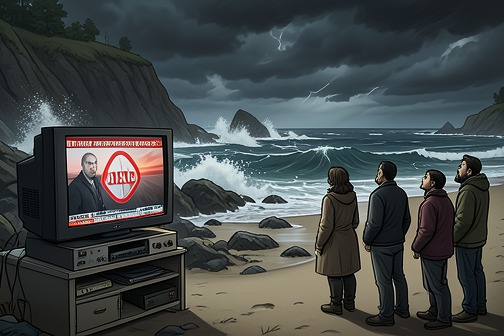
The [Oregon Coast Earthquake and Tsunami](entity:event-recall-event-f31ea2c528fa) is the second major seismic disaster shown during the family’s captivity at the cabin, and the moment when a forecast associated with [Adriane](entity:character-recall-character-adriane-78facb5d7f13)’s visions becomes visible on television. A magnitude 8.6 earthquake off [Oregon](entity:location-recall-location-oregon-c068cd7d4a38) is followed by a tsunami that overwhelms the shoreline at [Cannon Beach](entity:location-recall-location-cannon-beach-09910f216de6). The broadcast supplies the visitors with apparent confirmation of their warnings, while its images force the family to confront the gap between rejecting their ultimatum and seeing a disaster unfold before them.
## Background and the First Warning
The Oregon disaster follows a magnitude 7.9 earthquake centered in the [Aleutian Islands](entity:location-recall-location-aleutian-islands-826748cacf3b), which the news reports struck more than four hours earlier. The U.S. National Tsunami Warning Center had issued an advisory for British Columbia and a long stretch of the [Pacific Northwest](entity:location-recall-location-pacific-northwest-40cfe44c3f3a) coast. The Pacific Tsunami Warning Center, meanwhile, issued its strongest warning for [Hawaii](entity:location-recall-location-hawaii-ea53a8e2a05b), ordering evacuations from north-facing shorelines. Its spokesperson explains that detection buoys across the Northern Pacific had registered conditions consistent with a sizable wave moving toward the islands.
The television first shows the Hawaiian tsunami reaching an evacuated resort on [Kauai](entity:location-recall-location-kauai-ae4c3a138334). Water moves across the beach and into the resort grounds and lower-level rooms; further footage shows waves affecting small towns, marinas, docks, boats, and coastal roads. The spokesperson emphasizes that advance warning allowed coastal areas to evacuate, and that no injuries or deaths have yet been reported. The scene offers a striking but limited precedent for what follows: the first wave brings extensive property damage, while the threatened Oregon coast faces a more immediate and dangerous emergency.
## The Earthquake and Tsunami on the Broadcast
As the family watches, a breaking-news interruption announces a second massive earthquake in the Pacific, measuring 8.6 on the Richter scale. Its epicenter is about seventy miles off Oregon, within the [Cascadia Subduction Zone](entity:location-recall-location-cascadia-subduction-907a202e08f8), an area scientists had long feared could produce a catastrophic quake. The abrupt announcement changes the broadcast from coverage of an earlier disaster to a developing emergency much closer to the coast.
Seismologists discuss the possibility that the Aleutian earthquake triggered the second quake. They report that it lasted almost five minutes and warn that people near the Oregon coast may have only minutes to reach higher ground. The scale and proximity of the quake could make evacuation difficult where buildings and infrastructure have been damaged. One scientist estimates a possible tsunami height of twenty to fifty feet and advises residents to seek ground eighty to one hundred feet above sea level; coastal bluffs around fifty feet high may not be sufficient.
The lead newscaster then announces that a tsunami has struck the Oregon shoreline and introduces footage from Cannon Beach. The shaky smartphone video shows the beach, its scattered rocks, and the prominent [Haystack Rock](entity:location-recall-location-haystack-rock-3b6c2ffe65ec). [Sabrina](entity:character-recall-character-sabrina-3c907245d1e7) recognizes the location from a visit the previous summer and identifies the landmark as nearly 250 feet tall. The recording does not establish whether the footage is live or taped. In it, a woman behind the camera acknowledges someone urging her to leave, but remains with the camera in the same place. The image therefore brings the danger close while leaving the precise timing and perspective of the recording uncertain.
## Adriane’s Vision and the Seen Disaster
Adriane recognizes the beach and rock as the scene from her recurring nightmare. She recalls staying awake rather than risk dreaming again about a tidal wave overwhelming the location, and now treats the footage as a match for what she had seen. Sabrina, by contrast, steps away from the television and says that this is not what she saw. The visitors do not share one identical vision, even as the broadcast appears to correspond to Adriane’s.
The camera eventually turns away from Haystack Rock. The receding view gives way to the approaching water, while people on the beach run and call for help. The footage shows the wave rising across the scene and overtaking the beach. Haystack Rock disappears into the ocean, along with the smaller rocks and the visible people who had been running up the shore; most of the beach is gone from view. [Wen](entity:character-recall-character-wen-79e161b9a39f) refuses Sabrina’s attempt to take her away from the television and leans into [Andrew](entity:character-recall-character-andrew-531aa0f64cfb). He reassures her that he loves her and tells her not to watch, while insisting that the broadcast does not prove or mean anything. The event thus becomes both a public disaster on the screen and an immediate family crisis in the cabin.
## Consequences and Significance
The visitors interpret the coastal disasters through the sacrifice demand they have imposed on the family. [Leonard](entity:character-recall-character-leonard-f502c6e53a05) had said that the family’s choice could prevent the apocalypse; after the Oregon footage, Adriane points to the television as evidence that the family should believe them. She links their refusal to choose with the deaths shown on the West Coast. [Eric](entity:character-recall-character-eric-7ec3f96e28e6) calls the connection coincidence, but his lack of conviction is apparent to the people watching him. The footage strengthens the visitors’ argument without, by itself, proving that the family’s decision caused the earthquake or tsunami.
Later, Eric distinguishes this second quake from the Aleutian earthquake: the earlier event had already occurred before the visitors arrived, but the Oregon disaster happened while they watched television. He also recalls that Adriane had described the beach and its great rock before the broadcast appeared. This combination—an event unfolding during the family’s vigil and a vision that seems to anticipate its setting—deepens Eric’s uncertainty without resolving the source or meaning of the visitors’ command. The televised catastrophe is therefore a turning point in the siege: it gives the ultimatum apparent evidentiary force, while preserving the possibility that the relationship between prophecy, disaster, and sacrifice remains misunderstood.
Event 11
Redmond (Jeff O’Bannon) is killed
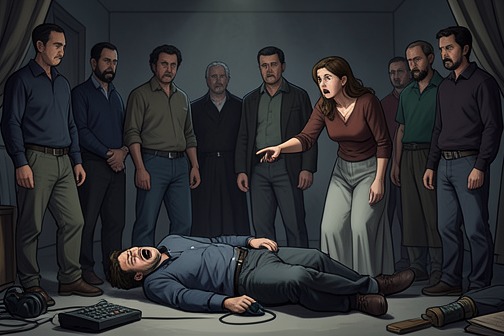
[Redmond's killing](entity:event-recall-event-redmond-s-killing-164fccc273b3) turns the visitors' demand for a sacrifice back upon the people making it. The dead man is identified as [Jeff O’Bannon](entity:character-recall-character-jeff-o-bannon-4e529f9babaf), [Andrew](entity:character-recall-character-andrew-531aa0f64cfb)'s former attacker; the revelation makes the cabin's violence part of a history that predates the siege. [Sabrina](entity:character-recall-character-sabrina-3c907245d1e7)'s later account places her, Andrew, and [Eric](entity:character-recall-character-eric-7ec3f96e28e6) in the killing, but she remembers it only in fragments and cannot say who delivered the fatal blow.
## Identity and Circumstances
At first, the dead man is known to the family as [Redmond](entity:character-recall-character-redmond-6af5a32ff63f). Andrew recognizes him only after Sabrina confirms that the visitors are using their real names. He then insists that Redmond is Jeff O’Bannon, the man who attacked him at a bar in [Boston](entity:location-recall-location-boston-aded649f4602). O’Bannon's changed appearance—his shaved head, heavier build, and swollen-looking face—had kept Andrew from recognizing him immediately. The name brings the earlier assault into the cabin: Redmond is not merely one of the armed strangers, but the person who had already made Andrew a target.
Andrew's recognition is emphatic, though Eric is less certain that he remembers O’Bannon or can match the name to Redmond. Andrew's lingering questions about why O’Bannon chose him give the identification a painful personal charge. The killing therefore has two meanings at once: it is an act of violence within the siege, and the death of the man responsible for an earlier attack whose motives Andrew never fully understood.
## Violence and Its Aftermath
The killing precedes the renewed demand that Andrew and Eric choose one of themselves to die. [Leonard](entity:character-recall-character-leonard-f502c6e53a05) argues that the past cannot change the choice before them and that they were selected to pass a test. Andrew counters with the immediate facts of their captivity: he and Eric are tied to chairs, and the visitors have killed the man whose body lies on the deck. His appeal treats the killing as evidence against the visitors' claim to moral authority, rather than as a deed that can be set aside in service of their supposed mission.
The violence also leaves practical traces in the cabin. [Adriane](entity:character-recall-character-adriane-78facb5d7f13) stacks three homemade weapons by the woodburning stove and spends more than an hour washing them with warm water and dish detergent, then drying them with hand towels. The next day, Leonard and Sabrina take up the same weaponized wooden staffs they had wielded before, holding them with the assurance of people who have already used them successfully. Adriane's cleaned weapon, by contrast, is propped against the stove and left unused. The implements move between violence, cleaning, and renewed threat; their orderly handling does not undo what has happened.
## Sabrina's Recollection
Sabrina later tells Andrew and Eric that the three of them killed Redmond. She describes her state at the time as trance-like, while acknowledging that she has no prior experience by which to judge what a trance is. She believes that part of her was absent, as if lost in the vision of an endless destruction in a valley, while enough remained for her to perceive Redmond's masked face and feel the wooden handle vibrate in her hands as she struck him.
Her account is deliberately incomplete. Sabrina cannot recall how many times she swung, cannot reconstruct the struggle in detail, and cannot identify which of the three dealt the final blow. She says that even her memory of the fight at Andrew's SUV has already faded to only its broadest traces. The killing is thus both a confirmed event and a broken recollection: Sabrina accepts her participation but cannot offer a stable, complete sequence of actions. Her testimony establishes collective responsibility without assigning the decisive act to a single person.
## Significance in the Siege
Redmond's death exposes a contradiction at the heart of the visitors' ultimatum. They demand that the family sacrifice one of its own, while the group itself has already killed a member; Leonard nevertheless insists that the past is irrelevant to the test and urges Andrew and Eric to comply. Andrew refuses that separation between doctrine and conduct, pointing to the bound men and the body on the deck as evidence of what the supposed test has already made ordinary.
The later account also complicates the killing without excusing it. Sabrina's sense of absence and the gaps in her memory distinguish the act from a clear, fully remembered decision, but her own statement still names the three participants. The identity revealed by Andrew gives the death an additional personal consequence, while the uncertainty over the final blow prevents the event from resolving into a simple act of revenge. In the siege's moral conflict, the killing is both a breach of the visitors' claimed authority and a further instance of the violence through which that authority is enforced.
Event 12
Andrew Escapes the Cabin and Fights Sabrina
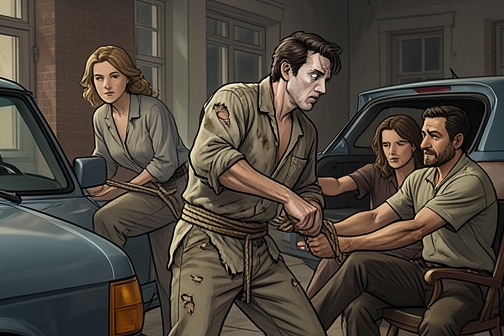
[Andrew](entity:character-recall-character-andrew-531aa0f64cfb)’s escape from the cabin turns a quiet attempt to free himself into a desperate fight with [Sabrina](entity:character-recall-character-sabrina-3c907245d1e7). While the others struggle to separate [Eric](entity:character-recall-character-eric-7ec3f96e28e6) from [Wen](entity:character-recall-character-wen-79e161b9a39f), Andrew slips out of his restraints and makes for the SUV and the gun in its trunk, only to be intercepted, injured, and forced to fight his way to the weapon before returning to the cabin.
## Escape from the Cabin
As Sabrina, [Leonard](entity:character-recall-character-leonard-f502c6e53a05), and [Adriane](entity:character-recall-character-adriane-78facb5d7f13) focus on Eric’s locked embrace around Wen, Andrew takes advantage of their distraction. He raises his shoulder, works his right hand free, and lets the remaining rope fall from his wrist. His fingers are swollen and chafed, too stiff to close fully into fists, but he uses them to undo the knots at his ankles without drawing the group’s attention. Eric continues resisting their efforts to pull him away from Wen, while Wen strikes out at Leonard and tells the intruders to go away.
Once free, Andrew weighs two routes to his SUV and the handgun in its trunk. The front door is the shortest way outside, but getting through the others and unlocking it could cost him time. The deck slider offers a less obstructed exit, though reaching the driveway from there would mean running down the stairs and around the cabin. He stands, intending to slip out through the back, but Adriane moves directly into his path. When she lunges, Andrew knocks his chair onto its side and kicks it into her legs, making her stumble over it.
Andrew cannot take on all three intruders without his gun. He abandons the stealthy route, bolts for the front door, and opens it in one motion. The door swings so hard that its momentum nearly throws him back inside. He manages to stumble out and pull it shut, but his forward-leaning body outruns his slow, heavy feet; he pitches down the short stairs and lands face-first on the grass. He gets upright again as Sabrina comes out behind him, calling for him to stop and return.
## The Fight at the SUV
The driveway turns the attempted escape into a close-quarters fight. Andrew reaches for his car keys and remembers that he gave them to Eric the previous day, when the intruders were breaking into the cabin. Before he can get to the passenger door, Sabrina’s weapon crashes into the outside of his right knee. The joint buckles under the blow; he falls against the SUV and lands on the injured leg, then turns to face her. Sabrina tells him, “You can’t leave them. You can’t leave us. We all need you. Come back inside. I’ll help you,” in a detached, unearthly monotone, even as she raises the weapon for another swing. Her promise and her attack arrive together, making the struggle’s central contradiction physical: she calls him back to the group while preventing him from choosing where to go.
Andrew throws gravel and dirt into Sabrina’s face, scrambles up onto his left knee, and punches her in the stomach. When he reaches for her weapon, she falls backward but keeps hold of it. He tries to reach the rear of the SUV by dragging his injured right leg through the cabin between the seats. Sabrina gets up and strikes the rear passenger window with her shovel blade. The first blow leaves a gouge and crack rather than breaking the glass; the next shatters a window, sending small glass cubes against Andrew’s bare legs and into the trunk. The vehicle, which had represented a route to freedom and a place to retrieve his gun, becomes a confined space Sabrina can attack from outside.
Andrew pulls open the hatch in the SUV’s side panel and finds his biometric gun safe, a compact aluminum case opened by the owner’s palm or thumbprint. He waves his palm over its sensor; the lid rises on miniature hydraulic arms, exposing his short-barreled .38-caliber revolver, loose bullets, and an open cardboard ammunition box. As Sabrina reaches the car door and orders him out, Andrew takes the revolver and begins loading its five chambers. She jabs him between the ribs with the weapon, but he closes the cylinder and hauls himself back over the seat into the rear passenger area. From there he fires a hurried shot. It strikes the ceiling above the stronger metal of the doorframe rather than Sabrina, and the report leaves both of them momentarily startled. Andrew points the gun at her and orders her to drop her weapon and back away.
## The Retreat and Return
Sabrina does not back away when Andrew aims at her. After he warns her to drop the weapon, he orders her to stop moving and crosses the SUV’s back seat, his bare legs scraped by broken glass and his side bleeding where she jabbed him. His knee has already darkened to a storm-cloud purple. He pulls himself upright using the open door and cautiously tests the injured leg; it holds, but only briefly.
Sabrina runs toward the cabin, still carrying her weapon. Andrew follows her with the gun and tries to aim low, toward her legs, rather than shoot over the SUV’s door or through its broken window. As he fires, his knee gives way and bows sideways. The shot misses, echoing across the lake and the surrounding woods, and Andrew falls. Sabrina disappears around the cabin before he can tell whether she is fleeing into the woods or returning to help the others. He gets back to his feet, unwilling to wait for the SUV’s rear gate or search the trunk for more ammunition while Eric and Wen remain inside.
At the front door, Andrew pauses with his shoulder against the frame and the gun raised near his face. He is wary of firing indiscriminately: the first shot at Sabrina had unnerved him because he had not consciously decided to shoot. From inside, Adriane cries that she does not want to die, while Leonard repeatedly asks Eric to stop swinging and talk. Andrew turns the knob, enters, and lowers the gun; no one appears to notice him.
Eric is guarding Wen’s bedroom doorway, still partly caught in rope attached to a fallen chair. Sweating and breathing in strained gulps, he swings Adriane’s bladed staff in broad, tiring arcs. Leonard stands near the couch and dark television with the dual-tipped wooden staff hidden behind his back, speaking in a conciliatory tone. Andrew immediately recognizes the contrast between Leonard’s earlier insistence that time was running out and his present willingness to let Eric exhaust himself. The escape has brought Andrew back into the cabin armed, but the confrontation he returns to is still organized around Leonard’s effort to control the pace of the struggle.
## The Escape’s Reversal
The sequence makes escape a temporary change in who controls the room, not a clean passage from captivity to safety. Andrew’s plan depends on reaching the weapon, but getting to it requires abandoning concealment, crossing exposed ground, and entering a vehicle Sabrina can attack. Each apparent gain carries a new vulnerability: the open route out of the cabin ends in a fall, the SUV becomes a trap once its window breaks, and the revolver gives Andrew a means of resistance without restoring his injured mobility. The objects that should enable escape—the door, car, keys, and gun—work only imperfectly, and their failures dictate the pace of the struggle.
Sabrina’s actions sharpen that instability. She calls Andrew back and says she will help him while striking his knee and pursuing him with her weapon. Her appeal presents the group’s survival as a bond that should keep him inside; her attack makes that bond indistinguishable from coercion. Andrew’s resistance is equally unsettled: he fires before he has consciously decided to do so, then tries to aim low when Sabrina runs, only to miss as his knee gives way. The scene therefore denies him the clean authority of an armed rescuer. His choices matter, but they are made under pressure from pain, urgency, and the danger facing Eric and Wen.
Returning to the cabin does not settle the struggle; it changes its balance. Andrew enters with the gun lowered, while Eric remains physically entangled and is still defending Wen’s doorway. Leonard’s calm appeal to talk sits beside his concealed staff and his willingness to let Eric tire himself out. The contrast leaves the escape unresolved: Andrew has regained the ability to act, but the family remains confined within a confrontation whose apparent calm may itself be a tactic.
Event 13
Wen’s Accidental Death in the Gunfight
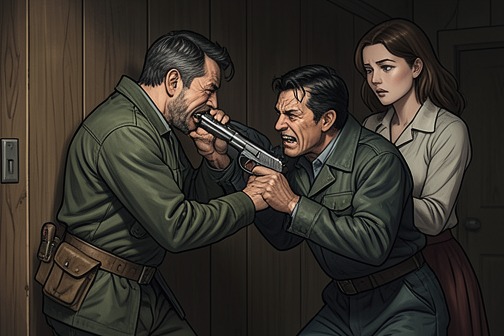
[Wen’s Accidental Death in the Gunfight](entity:event-recall-event-9953d74d06ab) is the turning point in the cabin confrontation: while [Andrew](entity:character-recall-character-andrew-531aa0f64cfb) and [Leonard](entity:character-recall-character-leonard-f502c6e53a05) struggle over a gun, [Wen](entity:character-recall-character-wen-79e161b9a39f) tries to protect Andrew, and the weapon fires accidentally. Her death changes the family’s immediate crisis into a question about whether an unintended loss can satisfy the visitors’ demand for a willing sacrifice.
## The struggle for the gun
Wen is beside the struggle as Leonard, much larger than Andrew, presses him against a cabin wall. Both men’s hands are wrapped around the gun, and their efforts to control it leave the weapon caught between them. Leonard’s size and strength give him the advantage; Andrew is tiring and struggling to push him away. Wen calls on Leonard to stop because he is hurting Andrew, while [Eric](entity:character-recall-character-eric-7ec3f96e28e6) is still working free of the rope and chair nearby.
Andrew drops to his knees, a move that throws Leonard off balance and brings the side of Leonard’s head against the wooden wall. Leonard recovers and continues trying to wrench the gun free. The struggle has shifted suddenly: Andrew’s maneuver interrupts Leonard’s hold, but neither man has secured the weapon. Wen is still close enough to witness the confrontation when her perception abruptly ends.</body_en
## The accidental discharge and immediate aftermath
The gun fires while Leonard and Andrew are still struggling over it. Leonard later recalls that Andrew’s sudden drop had thrown him off balance and that he was angry when he resumed trying to take control of the weapon. As their hands remained together around it, Leonard felt the trigger move; only after the shot did he understand what had happened. He had not been looking directly at Wen, but he saw her fall. The sequence makes the death accidental: neither man had chosen Wen as a sacrifice, and the immediate cause was the gun going off during their struggle.
The struggle gives way to the family’s grief. Andrew and Eric gather around Wen’s body, holding and shielding her as their cries become undifferentiated screaming. Leonard, apart from them, remains on the floor and cannot bring himself to look at her. He repeatedly apologizes, in speech and in his thoughts, while condemning himself as a failure. His reaction contrasts with the anger that preceded the shot: the man who had been trying to overpower Andrew now understands himself as responsible for a loss he did not intend.
The death does not resolve the visitors’ demand. Leonard explains that they had required Andrew and Eric to choose a willing sacrifice; the group had been forbidden to sacrifice either man themselves. Because Wen’s death was an accident and no one chose it, Leonard cannot tell whether it will be accepted as sufficient. He urges the others to check the television for evidence that the expected catastrophe has stopped, but admits that he does not feel the crisis is over. Andrew places Wen’s body on the couch and leaves his hand on her covered head, while the family’s immediate loss remains entangled with the unresolved threat beyond the cabin.
## A break in perspective
The scene’s abrupt change in focalization makes its uncertainty part of the event’s form. Wen’s perception ends during the struggle; the account then moves into Leonard’s experience, where the trigger’s movement becomes a dividing point between what he remembers before the shot and what he understands afterward. This shift gives the reader access to Leonard’s dawning recognition without supplying an independent view of the instant itself. The death is therefore presented through a gap in perception and a belated understanding, rather than through a fully observed moment.
## The unresolved test
Leonard’s explanation exposes the gap between Wen’s importance to the family and the visitors’ rule for the sacrifice. He insists that Wen matters profoundly, but says the demand had required Andrew and Eric to choose someone willing; neither parent had chosen her, and her death occurred by accident. He therefore cannot say whether it will count. The distinction offers no comfort: it makes the family’s loss immediate while leaving its supposed purpose unsettled.
The television becomes the proposed means of testing whether the catastrophe has been stopped, but the scene supplies no confirmation. Eric prays for help and senses that the threat remains present at the cabin’s entrance; Leonard, too, admits that the crisis does not feel finished. The event thus closes not with an answer but with a suspended test: Wen is dead, while the rule that was meant to give her death meaning remains uncertain.
Event 14
Redmond's killing
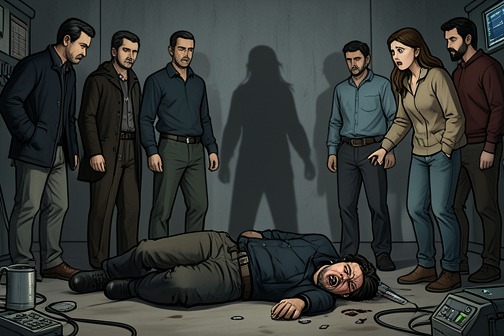
[Redmond's killing](entity:event-recall-event-redmond-s-killing-164fccc273b3) is a collective death that becomes a turning point in the captives’ understanding of the violence at the cabin. [Andrew](entity:character-recall-character-andrew-531aa0f64cfb) identifies the dead man as [Jeff O’Bannon](entity:character-recall-character-jeff-o-bannon-4e529f9babaf), the person who had attacked him in a [Boston](entity:location-recall-location-boston-aded649f4602) bar; [Leonard](entity:character-recall-character-leonard-f502c6e53a05)’s faith in the group’s mission is shaken by that recognition, and [Sabrina](entity:character-recall-character-sabrina-3c907245d1e7) later describes her own participation as a fractured, trance-like memory. [Eric](entity:character-recall-character-eric-7ec3f96e28e6)’s account adds a further uncertainty: he says a figure made of light appeared among those gathered before the killing. The event is therefore recalled not as a single, settled explanation, but as an act whose identity, agency, and meaning remain in dispute.
## Discovery of [Redmond](entity:character-recall-character-redmond-6af5a32ff63f)’s identity
Andrew’s recognition breaks into the cabin’s tense aftermath. He reacts with alarm and insists that the dead man is Jeff O’Bannon. Eric repeats the name, trying to connect it with something he knows, while Leonard, Sabrina, and [Adriane](entity:character-recall-character-adriane-78facb5d7f13) respond with confusion. Sabrina asks whether any of them are using false names; the others deny it. The exchange changes the terms of the killing: Redmond is no longer only the masked member of the intruding group, but the man Andrew recognizes from an earlier assault.
That identification matters because it gives the violence a personal history that the others did not share. Andrew’s certainty rests on his experience of the bar attack, and he presses Eric to understand that the attacker and the man killed at the cabin are the same person. Leonard believes Andrew, and the revelation unsettles his confidence in what he has been asked and commanded to do. It does not undo the killing, but it makes the group’s account of its purpose less secure: the supposed ritual victim had a name and a connection to the family’s past.
## Sabrina’s fragmented recollection
Sabrina later tells Andrew and Eric that she was not fully present when the three of them killed Redmond. She compares her condition to a trance, while acknowledging that she has no prior experience by which to verify that description. Her memory preserves selected elements: Redmond grinning behind his mask, the wooden handle in her hands, and the knowledge that she took part. She cannot recall how many times she struck him or which of the three delivered the final blow. Even her memory of the struggle near [Andrew’s SUV](entity:object-recall-object-suv-08419502ec70) has already begun to lose detail.
The gaps make her account an imperfect form of testimony, not a complete reconstruction of the event. Sabrina says that part of her seemed to remain in the valley during an earlier vision, while enough of her remained to witness and participate in the killing. She describes being returned to her car near noon without remembering the walk back, and she mentions other gaps surrounding her attempt not to come to [New Hampshire](entity:location-recall-location-new-hampshire-5211f8695ec5) and her later awareness of being in a cab on the way to LAX. These details place her recollection of Redmond’s death within a broader experience of disrupted memory, without establishing that the killing itself was supernatural or that she can explain precisely what happened.
## Eric’s account of the presence
Eric’s memory supplies a different kind of uncertainty. He tells Sabrina that, just before Redmond was killed, he sensed a presence in the room and saw something appear among the circle around Redmond before the group began striking him. He describes the sensation as a displacement of space, comparing it to water rising when an egg is dropped into a pot. He initially tried to account for what he saw as a flash from the deck or as a possible effect of concussion, stress, or migraine.
Eric says the figure seemed to look at him, and he emphasizes that it regarded him. He has not seen it again, but says he continued to feel that it was nearby. He places its presence sometime after Adriane and [Wen](entity:character-recall-character-wen-79e161b9a39f) died, and says he shut the cabin’s front door to keep it outside. When he later tells Andrew that the figure was made of light and was there when Redmond was killed, Andrew attributes the experience to concussion. Eric rejects that explanation. The disagreement leaves the event suspended between two interpretations: a perception Eric insists was real and an experience Andrew seeks to explain through injury.
## Consequences for the survivors
Leonard’s response shows how the killing changes the group from within. He repeatedly apologizes as he moves through the aftermath, and understands his actions as penance for breaking a promise to a child and for making that promise in the first place. He also admits, privately, that when Adriane was shot he felt relief and a spark of joy because he would not have to kill her as he had killed Redmond. His reaction complicates any appearance of unshaken devotion: remorse, relief, and continued obedience coexist.
The revelation about Jeff O’Bannon further weakens Leonard’s faith, though he continues to believe he has no real alternative. He tells himself he is only a vessel, yet fears that what has gone wrong is his fault. His reliance on having no choice offers temporary reassurance while also exposing the contradiction at the heart of his position: he describes himself as compelled, but remains responsible for continuing. Sabrina’s incomplete memory and Eric’s insistence on the light presence deepen that uncertainty rather than resolving it.
## Narrative significance
The scene binds an identifiable human history to a death framed by claims of command and revelation. Andrew’s recognition restores Redmond’s name and connects him to the earlier assault; Leonard’s response shows that this knowledge has consequences for belief; Sabrina’s account withholds a clear memory of individual responsibility; and Eric’s testimony introduces a presence that Andrew refuses to accept as supernatural. No single account settles the event. Instead, each survivor carries a different fragment, and the killing’s aftermath turns those fragments into a conflict over whether the violence was chosen, compelled, or witnessed by something beyond the people in the room.
Event 15
Adriane's death
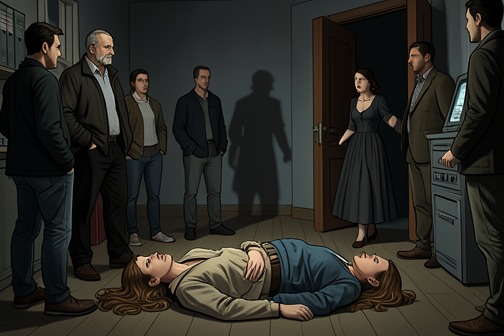
[Adriane's death](entity:event-recall-event-adriane-s-death-3f5baefbd7a9) is conveyed through aftermath and retrospective reference rather than a described death scene. It marks a point after which [Eric](entity:character-recall-character-eric-7ec3f96e28e6) says he sensed a presence in the cabin, while [Adriane](entity:character-recall-character-adriane-78facb5d7f13)'s body remains physically present as [Sabrina](entity:character-recall-character-sabrina-3c907245d1e7) struggles to get out onto the deck.
## Retrospective Reference
Eric places the presence he sensed after both Adriane and [Wen](entity:character-recall-character-wen-79e161b9a39f) had died. He describes the room's space as seeming displaced and says that something appeared in the circle around [Redmond](entity:character-recall-character-redmond-6af5a32ff63f) before the group began striking him. Eric had tried to explain the sight as a flash of light, or as a hallucination brought on by concussion and stress, but says the figure seemed to look at him. His account makes Adriane's death part of the sequence that precedes this disturbing experience, without specifying how she died.
## The Body in the Cabin
In a later scene, Sabrina crosses from the kitchen toward the common room and deck while Adriane's body lies supine in her path. Sabrina fumbles with the screen slider, which will not stay in its track; when [Andrew](entity:character-recall-character-andrew-531aa0f64cfb) tells her to remove it and throw it outside, she carries the screen door onto the deck and stashes it between the picnic table and the cabin wall. Adriane's death is thus present in the scene as an immediate physical fact, even as the living characters focus on getting through the doorway and managing the cabin's tense surroundings.
## Aftermath and Reported Presence
Eric says the figure was around after Adriane and Wen died, and that he shut the cabin's front door to keep it outside. He has not seen it again, but believes it will soon return. The sequence ties Adriane's death to the group's increasingly uncanny experience without establishing that the presence is objectively real or that her death caused it. [The cabin](entity:location-recall-location-the-cabin-7bfe80451830)'s doors and thresholds become part of Eric's response: after sensing the figure, he tries to keep it out.
Event 16
Wen's accidental shooting
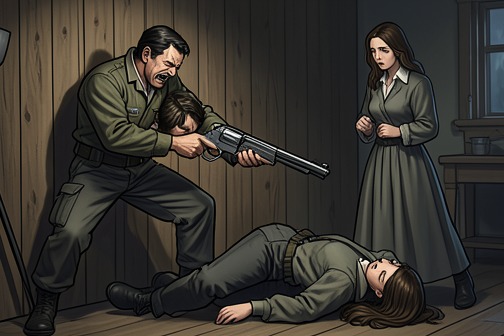
[Wen](entity:character-recall-character-wen-79e161b9a39f)’s accidental shooting is the moment the struggle inside the cabin turns into an irreparable family loss. The gun is held between [Andrew](entity:character-recall-character-andrew-531aa0f64cfb) and [Leonard](entity:character-recall-character-leonard-f502c6e53a05) when it fires, and the uncertainty over responsibility shapes the grief that follows.
## The Struggle and the Shot
Wen is beside the struggle as Andrew and Leonard wrestle over the gun. Leonard’s greater size and strength drive Andrew against the wall, but Andrew drops to his knees and throws Leonard off balance. As Leonard tries to wrench the weapon free, Wen calls for him to stop hurting Andrew. In the confused movement, Leonard feels the trigger click beneath their joined hands; the gun fires, and Wen falls. The moment is accidental, but not simple: Andrew’s finger is on the trigger, while Leonard’s hands are squeezing Andrew’s hands around the gun.
## Immediate Aftermath
Andrew and [Eric](entity:character-recall-character-eric-7ec3f96e28e6) gather around Wen, holding and shielding her as their cries give way to screaming. The struggle that had centered on controlling the gun is replaced by a shared attempt to be near her; for Leonard, the change leaves no room to treat the shot as merely another turn in the fight. He understands that he had felt the trigger move beneath his hands, and the instant divides his memory into a before and an after. He cannot bring himself to look at Wen. On the floor, crying, he repeats an apology, though he knows it cannot undo what has happened.
Leonard’s guilt is bound not only to the gun but to the promise he had made Wen: that she would be safe and that he would not let anything happen to her. He tells Andrew and Eric that he meant to keep that promise for as long as he could, while recognizing that saying so may deepen their pain. His later attempt to reassure Andrew is similarly incomplete. Leonard calls the shooting an accident and points to the struggle, but cannot say aloud that his own hands squeezed Andrew’s around the weapon. Nor can he bring himself to voice the larger responsibility he feels for having followed the visitors’ demands instead of refusing them.
Andrew’s grief turns toward the care he can still give Wen. He wraps her in flannel sheets, carries her to the couch, says her name repeatedly, and rests his forehead against hers before kissing her through the covering. He cannot bring himself to explain that the gun went off accidentally; instead, he treats taking her away from the cabin and bringing her home as an oath. The gestures do not resolve who is responsible. They show the family trying to protect Wen after the moment when protection has become impossible.
## Guilt, Responsibility, and the Failed Sacrifice
The shot continues to recur in Andrew’s mind as a sequence he cannot make morally simple: Leonard’s hands closing around his, Andrew’s finger on the trigger, the click, and the gun’s recoil. Andrew does not know where the bullet went until Eric rushes to Wen. Later, he remembers seeing her and dropping beside Eric; the memory remains bound to his own actions, even though he did not intend the gun to fire. He fears that Eric may partly blame him—not only because the weapon was in his hand, but because he had brought it to the cabin and could not stop the trigger from being pulled. The handgun remains in his back pocket, an object he still has to carry even as he wishes he could hold Wen instead.
That contradiction follows Andrew into the practical aftermath. He reloads the handgun because he fears another danger may appear, telling Eric he will get rid of it once they are safe. Eric offers to help, but the promise of a future disposal sits uneasily beside the immediate need to keep the weapon ready. Its presence makes the accident both past and ongoing: the same gun that killed Wen remains part of the family’s attempt to survive.
Later, with rain falling and [Sabrina](entity:character-recall-character-sabrina-3c907245d1e7)’s body nearby, Andrew rejects the visitors’ demand that Wen’s death be judged insufficient. He tells Eric to set aside the rules and coincidences and insists that they have no right to demand another sacrifice in the name of their god. His declaration comes through sobbing, not as a resolution to his grief but as a refusal to let the shooting validate the visitors’ terms. Eric agrees with him, while recognizing that no explanation can restore Wen or take them home. The event’s final consequence is therefore twofold: Andrew continues to carry the guilt of the accidental shot, yet he refuses to treat that death as payment that obliges the survivors to surrender anyone else.
## Grief Beyond Explanation
The force of the loss is measured against how rarely Andrew had allowed Eric to witness him crying: before Wen’s death, Eric had seen it only after Andrew returned from a two-day hospital stay following the bar attack. Then Eric sat beside him and held him in silence; when the crying passed, Andrew put an end to the moment. Now the grief cannot be closed off so neatly. Eric senses the pressure of time but cannot find an explanation capable of undoing what has happened, and Andrew’s tears mingle with the rain as he rejects the demand that Wen’s death be judged insufficient. The accident leaves the family bereaved; it does not make their loss an acceptable price or settle the question of what they owe.
Event 17
Leonard's killing
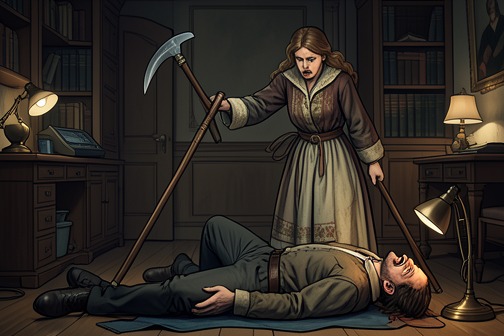
[Sabrina](entity:character-recall-character-sabrina-3c907245d1e7)’s killing of [Leonard](entity:character-recall-character-leonard-f502c6e53a05) turns a moment of apparent cooperation into a decisive act of violence: she strikes him with the staff [Redmond](entity:character-recall-character-redmond-6af5a32ff63f) made for her, then rejects the weapon and tries to help [Andrew](entity:character-recall-character-andrew-531aa0f64cfb) and [Eric](entity:character-recall-character-eric-7ec3f96e28e6) move forward. The aftermath makes the killing more than an end to Leonard’s immediate threat; it leaves the three survivors facing both his death and Sabrina’s part in it.
## The Killing and Its Immediate Aftermath
Sabrina approaches Leonard while Andrew is preparing to leave without her and Eric is urging Andrew to trust her. She carries the staff with its curved blade, a weapon she had earlier picked up amid a sense of isolation and detachment. Her attack begins with a downward blow and continues until Leonard is no longer moving. The narration marks a change in Sabrina during the assault: she describes being brought back from a state of disconnection by the impact, and says that by the end she is fully herself again.
Afterward, Sabrina throws the staff aside. It strikes an end table and knocks a yellow-shaded lamp to the floor. She apologizes to Andrew and Eric and promises never to pick up the weapon again. She then searches the floor, retrieves Leonard’s mesh mask and puts it in her pocket, and finds the television remote. Her attention to these objects links the immediate aftermath of the killing to the group’s next actions rather than resolving the fear and uncertainty it creates.
## The Survivors’ Response
The killing does not immediately free Andrew and Eric to leave. As Sabrina unmutes the television, she tells them they do not have to listen or look at the screen. They agree that they are going, but remain where they are, afraid not only of the situation but of what each might be thinking. Their hesitation shifts the danger inward: with Leonard dead and Sabrina unarmed, neither man knows how to proceed or how fully to trust the other survivors.
Sabrina then places Leonard’s mesh mask over his face. The act conceals what the killing has done, but the mask’s whiteness quickly gives way to red, leaving his body still visibly altered beneath it. Andrew directs Sabrina to go onto the deck with him first. The instruction marks the fragile terms of their next movement: Sabrina has helped the family, yet Leonard’s killing has not erased their fear of her.
## Sabrina’s Perception and the Turn to Action
Before the attack, Sabrina experiences the cabin and the valley through an account of isolation: the presence Eric had tried to explain to her is absent, and she understands the surrounding darkness as emptiness rather than reassurance. Andrew suspects that her offer to find the keys may be a ploy, while Eric argues that she should be allowed to help. This disagreement leaves Sabrina’s trustworthiness unsettled at the moment she moves toward Leonard. The scene’s shift from estrangement to action is registered through her own perception: she describes the strike as bringing her back from nothingness, and says that by the end she is herself again. That return does not make the killing an uncomplicated liberation; her later promise never to take up the weapon again records her rejection of the act even as she acknowledges having carried it through.
## Narrative Perspective and Confirmation
The scene is narrated in Sabrina’s first person, with Andrew and Eric repeatedly addressed as its immediate listeners. That intimate mode keeps the account close to her changing perception, while their visible reactions provide an external counterpoint: they watch her after Leonard’s death, and Andrew handles the sledgehammer uncertainly. The shift from Sabrina’s inward account to the survivors’ guarded movements does not settle what the killing means to them; it makes the rupture legible both as her action and as a new fact the others must face.
Event 18
Worldwide airplane crashes
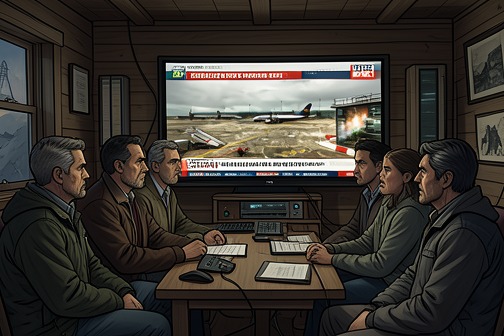
[Worldwide airplane crashes](entity:event-recall-event-worldwide-airplane-cras-617e31782102) enter the story through television coverage in the besieged cabin, where each new disaster tests the visitors’ claim that the world can be saved only by sacrifice. News reports confirm as many as seven planes have crashed without warning; after [Leonard](entity:character-recall-character-leonard-f502c6e53a05)’s death, [Eric](entity:character-recall-character-eric-7ec3f96e28e6) and [Andrew](entity:character-recall-character-andrew-531aa0f64cfb) connect the crashes to the predicted fall from the sky, while the cause remains unconfirmed.
## Background: A Command and a Sequence of Disasters
Leonard tells the family that he and the other visitors received the same message at 11:50 p.m. the previous Monday. He describes them as strangers united by a vision that has become a command. The family, he says, must willingly choose and kill one of its three members; if they refuse, the rest of humanity will perish, leaving the family alive to witness the aftermath. He presents the choice as both terrible and unavoidable, and says the visitors are messengers or a mechanism through which the message must pass.
The television’s earlier reports give this ultimatum an increasingly alarming context. A 7.9-magnitude earthquake in the [Aleutian Islands](entity:location-recall-location-aleutian-islands-826748cacf3b) prompts tsunami advisories along the Pacific coast and a strong warning for [Hawaii](entity:location-recall-location-hawaii-ea53a8e2a05b). The Pacific Tsunami Warning Center reports that a wave estimated at fifteen to twenty feet is moving toward the islands. Coverage then shows water inundating a resort on [Kauai](entity:location-recall-location-kauai-ae4c3a138334) and damaging other coastal locations. The spokesperson says early warnings allowed evacuations; at that point, no injuries or deaths have been reported.
A second earthquake deepens the crisis: an 8.6-magnitude tremor strikes near [Oregon](entity:location-recall-location-oregon-c068cd7d4a38), in the [Cascadia Subduction Zone](entity:location-recall-location-cascadia-subduction-907a202e08f8), an area long feared by scientists as the site of a potentially catastrophic quake. Leonard treats the earthquake as confirmation that the family’s refusal has consequences. [Sabrina](entity:character-recall-character-sabrina-3c907245d1e7) later summarizes the visitors’ interpretation as a sequence: [Redmond](entity:character-recall-character-redmond-6af5a32ff63f) dies, then the earthquake and tsunami occur; [Adriane](entity:character-recall-character-adriane-78facb5d7f13) dies, then the bird flu spreads. She warns that further deaths among the visitors will be followed by further calamities. This is the visitors’ account of the pattern, not proof that sacrifice causes the disasters.
## The Broadcast and the Crashes
The airplane disaster appears on the television while Sabrina is urging Andrew and Eric to leave the cabin. News coverage interrupts a program about bird flu with images of wrecked aircraft: smoking crash sites in fields and wreckage floating offshore. The commentator reports confirmation of as many as seven planes down without warning or distress calls. Airports around the world are cancelling flights, and officials face increasing speculation about a coordinated cyberattack on aircraft flight-management systems; the report does not establish that such an attack occurred.
Eric’s encounter with the coverage is bound up with the cabin’s uneasy relationship to the television. Earlier, Leonard insists that he watch the disaster reports, and the broadcast of the Hawaiian tsunami keeps the family focused on the screen. Later, as Eric reaches for the television’s power button, a fly crawls across the screen and guides his hand toward it. The resulting images overwhelm him, including scenes of airports, hospitals, crowded streets, and masked people. The flight-crash report then makes the visitors’ prediction of falling skies seem newly literal.
## Interpretation and Aftermath
The timing gives the crashes their force within the siege. After Leonard is killed, the reports of planes falling arrive as another apparent fulfillment of the visitors’ warnings. Eric tells Andrew that commercial airplanes crashed at the same time and that the events followed Leonard’s death. Andrew challenges both the prediction and the scale of the pattern, recalling that plane crashes occur and noting that a smaller aircraft had recently crashed into a house in Duxbury. Eric distinguishes that accident from multiple commercial planes apparently going down together, then recognizes that his own account may not be entirely accurate.
The sequence therefore remains suspended between corroboration and uncertainty. The broadcasts present concrete disasters, but they do not prove the visitors’ claim that the family’s choices control them; the proposed cyberattack supplies another possible explanation without resolving the evidence. For Eric and Andrew, however, the reports are no longer remote images. They become part of the immediate pressure to interpret the deaths and disasters as a single pattern, even as Andrew’s doubts resist the explanation the visitors offer.
Event 19
Sabrina's suicide
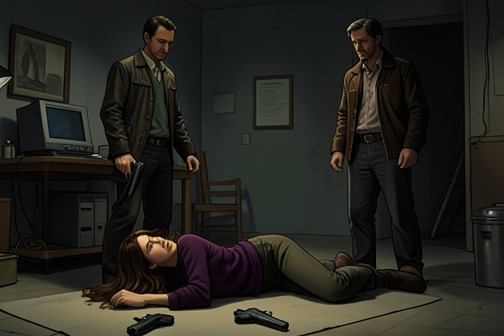
[Sabrina](entity:character-recall-character-sabrina-3c907245d1e7)’s suicide is the fatal turning point on the road out of the cabin: after helping [Andrew](entity:character-recall-character-andrew-531aa0f64cfb) and [Eric](entity:character-recall-character-eric-7ec3f96e28e6) toward the truck, she dies by gunshot while they are trying to understand why she has another weapon. Her death is preceded by an unexplained discovery, a visible struggle between her actions and her apparent wishes, and a warning to Eric that leaves the possibility of saving everyone unresolved.
## Background: violence at the cabin
At the cabin, Sabrina had stood with [Redmond](entity:character-recall-character-redmond-6af5a32ff63f) in front of [Leonard](entity:character-recall-character-leonard-f502c6e53a05) after Leonard declared that the choice had been made. They moved forward together with their weapons, in step, while Eric and Andrew protested from their restraints. The scene presented Sabrina as one of the people carrying out Leonard’s decision, though it did not explain how freely she acted or whether she believed the violence was necessary.
The violence escalated when [Adriane](entity:character-recall-character-adriane-78facb5d7f13) struck Redmond. Sabrina remained armed as Leonard maneuvered around the others and killed him with the sledgehammer. The killing altered the group’s position without resolving the circumstances that had brought them there. Later, Leonard believed he still had to carry out what he had been asked and commanded to do. He also regretted that Adriane had died, and admitted to himself that his relief at her death had spared him from killing her as he had killed Redmond. These events provide the immediate history of a group in which obligation, fear, and responsibility had become difficult to separate; they do not, by themselves, establish Sabrina’s private reasons for what she does on the road.
## The keys and the hidden handgun
On the road, Andrew and Eric catch up with Sabrina as she stands apart from them, crying and talking to herself. Andrew sees rope on the road and asks what she has been doing. Sabrina produces car keys on a red keychain and tosses them between the men. She tells them the truck is about another mile away and that they can make it. Her speech sounds to Andrew as though she is repeating a prepared statement, and Eric notices that her attention does not seem fixed on either of them.
Sabrina’s left arm is inside a dark blue drawstring bag. When she pulls it away, a handgun larger than Andrew’s is revealed; it appears to be a semiautomatic Glock. Sabrina says she did not know Redmond had left it there and insists that he must have hidden it. She says she had seen him hide the keys beneath a rock but had not seen the bag or the gun. The discovery changes the meaning of her apparent assistance: the keys point Andrew and Eric toward escape, while the concealed weapon raises a new and immediate danger. Andrew points his own gun at Sabrina but cannot bring his finger to the trigger, telling her to drop the weapon instead.
## Sabrina’s death
Sabrina says she wants to comply but cannot and will not be allowed to. Eric lays [Wen](entity:character-recall-character-wen-79e161b9a39f)’s body on the ground beside the road and kneels there. As he rises, his vision briefly fills with stars and dark shapes; he closes his eyes and takes three breaths. Andrew continues to demand that Sabrina put down the gun, aiming at her shoulder rather than firing.
Sabrina raises the handgun to her temple in a smooth movement that seems disconnected from her own control. At the same time, her free arm makes confused gestures, appearing to communicate both refusal and a plea for help. Andrew cocks his gun and again tries to stop her. Before firing, Sabrina turns toward Eric and tells him that there is still time to save everyone, even after what has happened, but that he must act quickly. She then begins another sentence and the gun discharges. She collapses against a fir tree and dies. The scene does not settle whether her final actions are an escape from unbearable circumstances, the result of an outside compulsion, or some combination; Sabrina’s warning and her contradictory gestures leave that uncertainty intact.
## Aftermath and significance
Andrew turns away, curses, and bends over, then carefully lowers the hammer of his own gun. Eric approaches Sabrina and takes the open handgun from her hand. As the forest darkens, flies gather on her body, and Eric hears what he understands as grinding gears rather than thunder. He interprets the sound as something ancient moving into place, perhaps beyond reversal. The shift from a practical discovery—the keys and the hidden gun—to an ominous, larger interpretation keeps the danger surrounding the characters active after Sabrina’s death.
Sabrina’s death also becomes a new decision point for Eric. While Andrew is still facing away, Eric considers whether he should act before Andrew turns around. He prays, then tells Andrew that Sabrina said he could still save everyone. Her warning therefore does not function as a clear explanation or a resolved promise: it transfers an urgent possibility to Eric, who is left holding her gun and weighing what to do. The event’s force lies in this unresolved tension between help and harm. Sabrina had been part of the armed group at the cabin, then directed Andrew and Eric toward the truck; at the roadside, the concealed Glock and her apparently involuntary movement make it impossible to read that help as simple or secure.
Event 20
Andrew and Eric reject the sacrifice
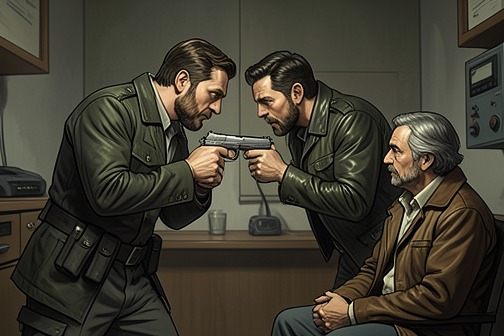
[Andrew and Eric reject the sacrifice](entity:event-recall-event-andrew-and-eric-reject-5f14ad7417b0) when the demand for a loved one’s death becomes immediate between them. Under threat of an approaching apocalypse, [Eric](entity:character-recall-character-eric-7ec3f96e28e6) raises a gun to take his own life, while [Andrew](entity:character-recall-character-andrew-531aa0f64cfb) turns it toward himself; neither will kill the other. Their refusal ends the ultimatum’s power to dictate their choice, though it does not resolve whether the disasters are real or what consequences may follow. Instead, they lower the weapon, lean into each other, and make a plan to carry [Wen](entity:character-recall-character-wen-79e161b9a39f) onward.
## The ultimatum and its repeated force
[Leonard](entity:character-recall-character-leonard-f502c6e53a05) presents the family with a stark condition: one of the three must willingly be chosen and killed, or the rest of humanity will perish. The family, Leonard claims, would survive only to witness the end and remain alone in the devastated world. Andrew struggles to take in the demand and its possible consequences, imagining the ruins of [Cambridge](entity:location-recall-location-cambridge-9c17d42a788b) and [Boston](entity:location-recall-location-boston-aded649f4602) before turning away from the image. Wen is hidden behind his chair; he wants to shield her from Leonard’s words, though he knows she cannot simply avoid hearing them.
Leonard promises that the intruders will not kill Andrew, Eric, or Wen themselves, and says they will remain in the cabin until the family chooses or its time runs out. That assurance does not make the situation voluntary: the family is confined, confronted with a threat to humanity, and told that its own survival depends on carrying out a killing. Leonard later presents the choice again as a gift and as a selfless act, setting it against the alternative of letting the clock move closer to “permanent midnight.” His repeated formulation gives the demand a ritual regularity, but not an escape from its coercive terms.
The intruders leave the family to reflect, while the news shows catastrophic earthquake and tsunami coverage. Andrew says there is no need to wait until morning and that they will not change their minds. Later, as the intruders press them again, Eric tries to delay a decision by asking [Adriane](entity:character-recall-character-adriane-78facb5d7f13) about the restaurants where she once worked. His attempt to draw the group into conversation cannot stop them closing ranks. The contrast is consequential: the family is urged to make a deliberate choice, yet the deadline and confinement keep narrowing the space in which any choice could be made freely.
## From doubt to an intimate crisis
As the pressure continues, Andrew questions whether the intruders are really prepared to kill one another, and whether they would eventually turn on his family. He still does not understand why they are killing themselves. The uncertainty is not abstract: the choice Leonard describes requires one family member to kill another, while the disasters shown on television give the ultimatum apparent confirmation. Andrew asks Eric directly whether he thinks one of them must be killed to prevent the end of the world. Eric answers by asking why the four intruders would invent the claim and subject the family to this ordeal.
At the final confrontation, Eric acknowledges that he believes one of them must die. Andrew answers that he loves Eric and will not let him do this, while Eric returns his love and says he is sorry. Eric asks whether the figure in the light is present. It is not. He feels its absence and hopes, nevertheless, that it might appear and guide him as it seemed to guide the others. With no such presence to direct him, the immediate decision remains between the two men.
Andrew drops his gun on the wet road and approaches Eric without his walking stick, stopping within reach. Eric asks him not to take the gun and points it beneath his own chin. Andrew promises not to touch it, then gently takes it away from Eric’s chin and turns its muzzle toward his own chest. He frames shooting him as a sacrifice that would leave Eric alone. Eric considers whether he could shoot Andrew and then himself, but Andrew does not answer. The exchange makes the apparent choice painfully personal: even an attempt to satisfy the demand would leave the survivor confronting the loss of the person he most wishes to protect.
## Refusal and what follows
Eric asks what would happen if the apocalypse were real. Andrew’s answer does not depend on disproving it: even if it is real, they will not hurt each other. When Eric says they cannot go on, Andrew insists that they will. Eric pulls the gun away from Andrew’s chest, lowers his arm, and drops the weapon to the forest floor. He leans into Andrew, who leans back; their hands find each other and hold on. The change is both practical and relational: the gun ceases to be an instrument of the required sacrifice, and physical closeness replaces the stance of a person preparing to die.
The refusal does not bring certainty or safety. The storm continues overhead, and the dark sky and lightning remain open to more than one interpretation: they may seem hostile, but the men have endured other storms, and neither can know whether this one is different. The narration likewise does not establish whether the prophecy has been defeated. It shifts into a first-person plural account of what the men intend to do, placing their shared future against the ultimatum’s demand that one choose death.
Their plan is concrete despite that uncertainty. They will retrieve the truck keys from the mud, lift Wen into their arms, and carry her. They intend to remember and love her, then walk down the road whether it is flooded, blocked by fallen trees, or split by fissures, and continue along the dangerous roads beyond it. The ending thus makes no claim that the family has escaped the catastrophe. Its decisive outcome is narrower and more immediate: Andrew and Eric refuse to become each other’s executioner, put down the gun, and choose to face whatever comes together.